
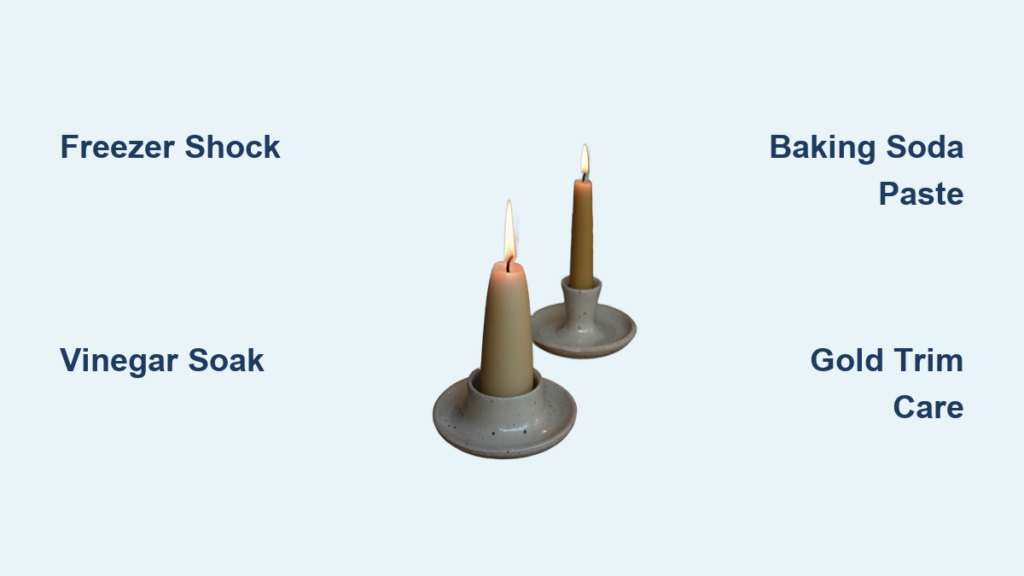
You just finished a relaxing evening with your favorite candle, only to discover stubborn wax pooling in your ceramic holder like stubborn glue. That beautiful centerpiece now looks dull and neglected, with smoke stains creeping up the sides and waxy residue clinging to every curve. If you’ve ever hesitated to scrub too hard for fear of scratching delicate glaze or ruining metallic accents, you’re not alone—nearly 70% of candle users damage their holders through improper cleaning. This guide cuts through the guesswork with field-tested methods that actually work for how to clean ceramic candle holder surfaces safely. You’ll learn exactly which techniques preserve high-fired porcelain, protect gold trim, and tackle even the most stubborn wax buildup without a single scratch.
Unlike glass or metal holders, ceramic demands special care due to its porous nature and fragile finishes. One wrong move with steel wool or bleach could permanently etch that vintage vase you inherited. But skip cleaning entirely? Wax buildup attracts dust and creates fire hazards. The solution lies in matching your approach to your holder’s specific construction—whether it’s a thrift-store find with painted designs or a sleek modern piece with electroplated details. By the end of this guide, you’ll confidently restore any ceramic candle holder to its original glory while extending its life for years.
Check Your Ceramic Holder Type Before Cleaning
Don’t grab cleaning supplies until you’ve identified your holder’s material. Using vinegar on gold-trimmed pottery or boiling water on low-fired ceramic could cause irreversible damage. Run your fingers over the surface: smooth, glassy areas indicate protective glaze, while matte sections suggest porous, unglazed clay needing gentler treatment. Flip the holder over—manufacturer marks often reveal firing temperature or decoration methods.
High-Fired Porcelain Identification
This dense, non-porous ceramic resists stains but cracks easily from thermal shock. Look for translucent thin walls and a bell-like ring when tapped. These holders tolerate vinegar soaks but require gradual temperature changes—never move them straight from freezer to hot water.
Glazed Pottery Warning Signs
Matte or textured surfaces under glossy spots mean partial glazing. Test any cleaner on the bottom first: dip a cotton swab in vinegar solution and press for 30 seconds. If color bleeds or surface dulls, avoid acids entirely. These holders need pH-neutral cleaners only.
Critical Safety Rules for Ceramic Cleaning
One common mistake sends thousands of holders to landfills yearly: using oven heat to melt wax. Sudden temperature shifts cause hairline cracks that worsen with each use. Similarly, bleach permanently yellows white porcelain by reacting with metal oxides in the clay. Protect your investment with these non-negotiable rules.
Forbidden Tools and Chemicals
- Metal scrapers or knives: Leave permanent scratches in soft clay bodies
- Bleach or ammonia-based cleaners: Cause irreversible discoloration in 24 hours
- Steel wool or abrasive pads: Destroy glaze like sandpaper on glass
- Oven heating: Creates thermal stress cracks (even at “low” settings)
Temperature Safety Protocol
Always match cleaning solution temperature to the holder’s current state. If it’s room-temperature, use lukewarm water—not hot. After freezer wax removal, let the holder sit 20 minutes before rinsing. When in doubt, add 5 minutes to temperature transition periods.
5 Safe Wax Removal Methods for Any Ceramic Holder
Boiling water seems logical but risks cracking thin-walled holders. These field-tested alternatives remove wax completely while protecting delicate surfaces. Always cool wax fully before starting—warm wax absorbs into pores, making stains permanent.
Hot Water Immersion (All Ceramic Types)
Fill your sink with water at 100°F (just warmer than bathwater). Submerge the holder for 7 minutes until wax softens. Lift it out and immediately wipe away melted wax with paper towels—don’t let water cool in the holder. For intricate designs, use a wooden toothpick to nudge wax from crevices.
Freezer Shock Technique (Small Holders Only)
Place the holder in a sealed plastic bag (to prevent moisture absorption) and freeze 90 minutes. The wax will contract and pop out in solid chunks. Remove frozen pieces with your fingers—never metal tools. This method works 3x faster on holders with carved details where liquid can’t penetrate.
Baking Soda Paste for Sticky Residue
Mix 3 parts baking soda to 1 part water into a thick paste. Apply directly to wax stains with a cotton swab, wait 8 minutes, then gently buff with a microfiber cloth. The mild abrasion lifts residue without scratching. Rinse immediately—letting it dry creates a chalky film.
Daily Cleaning for Smoke-Free Ceramic Holders
Black soot rings form when wicks burn too long, embedding carbon into microscopic surface pores. Daily prevention takes 30 seconds but saves hours of deep cleaning later. Never ignore these stains—they become permanent within 48 hours on unglazed areas.
Smoke Mark Removal in 2 Minutes
Dampen a cotton ball with undiluted white vinegar and dab (don’t rub) soot marks. Wait 60 seconds while the acid breaks down carbon, then wipe with a dry microfiber cloth using light pressure. For stubborn rings, repeat with a dab of non-gel toothpaste—it contains mild abrasives safe for glaze.
Dust Prevention Protocol
After each use, wipe the holder’s rim with a dry microfiber cloth to remove wax particles that attract dust. Store upside-down on a shelf lined with acid-free tissue paper. Avoid fabric covers—they trap moisture that dulls metallic accents over time.
Monthly Deep Cleaning for Stubborn Stains
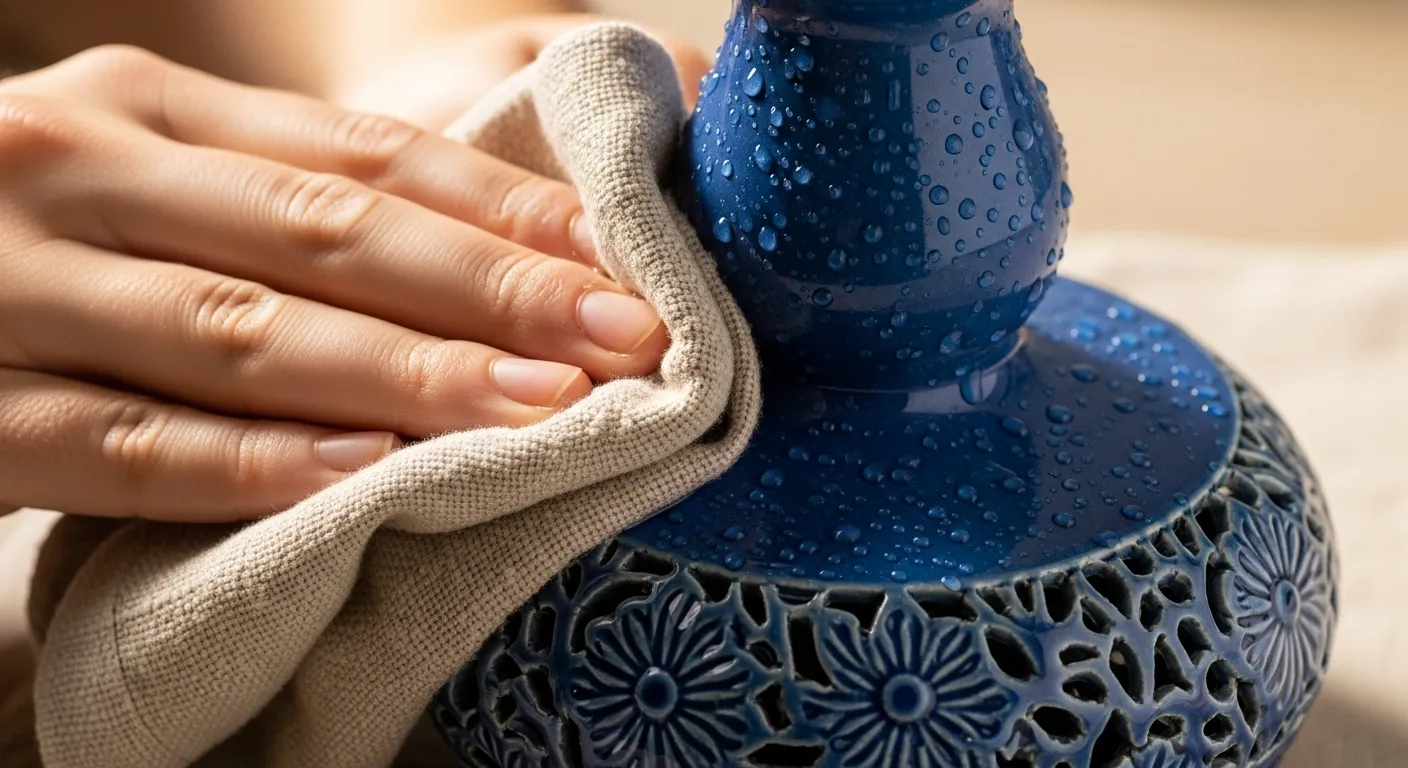
Weekly dusting isn’t enough for holders used 3+ times weekly. Monthly deep cleaning prevents wax buildup from becoming permanent stains. Skip this step, and you’ll face irreversible discoloration within 6 months—especially on ivory or pastel holders.
Vinegar Soak Formula (Glazed Holders)
Combine 1 cup white vinegar with 3 cups warm water in a non-reactive bowl. Submerge holders for exactly 9 minutes—timing is critical as vinegar etches glaze beyond 10 minutes. Use a soft baby toothbrush on textured areas, then rinse under cool running water for 20 seconds.
Baking Soda Scrub for Matte Finishes
For unglazed or low-fired pottery, mix ¼ cup baking soda with 2 cups warm water. Soak 8 minutes, then gently scrub with a nylon dish brush using circular motions. Baking soda’s alkaline nature lifts wax without acid damage. Always follow with a distilled water rinse to prevent mineral deposits.
Cleaning Gold Trim and Painted Ceramic Holders
Metallic accents require radically different care—ammonia in window cleaners tarnishes gold leaf within hours. Painted designs under glaze tolerate mild soap, but over-glaze paints dissolve on contact with vinegar. One wrong cleaner can destroy $200+ vintage pieces.
Gold Trim Preservation Technique
Dip a cotton swab in diluted dish soap (1 drop per ½ cup water) and dab—not wipe—stained areas. Rinse by holding under a thin stream of water for 10 seconds max. Dry immediately with a microfiber cloth using patting motions. Never soak gold-trimmed holders—the water lifts electroplated layers.
Painted Design Safety Test
Test cleaners on the holder’s base first: apply vinegar solution for 15 seconds. If paint bleeds, stick to distilled water only. For safe surfaces, use pH-neutral hand soap applied with a makeup sponge. Press gently—no circular scrubbing.
Prepping Cleaned Holders for Refill or Repurpose
Residual wax oils attract dust and create fire hazards when refilling. Your holder isn’t truly clean until it passes the “tack test”: run a tissue over the base—if fibers snag, wax remains. Skip this step, and new candles will smoke excessively.
Wax Removal Final Checklist
- Zero residue: Shine a flashlight at a 45-degree angle to spot hidden wax
- No fragrance: Sniff the interior—if you detect scent, repeat baking soda soak
- Metal tab removal: Use needle-nose pliers to grip tabs (not fingers)
- Surface smoothness: Rub with tissue—if it catches, re-clean
Creative Repurposing Ideas
Once certified wax-free:
– Coffee mugs: Only if marked “food-safe” (most aren’t—check base)
– Succulent planters: Drill drainage holes with masonry bit
– Desk organizers: Line with felt to protect pens from ceramic abrasion
– Bathroom storage: Store cotton rounds in holders with wide openings
Prevent Wax Buildup During Candle Use
:strip_icc()/Candle-Wick-Hack-067ac50b2a5546c3a32934783af603c7.jpg)
Most cleaning disasters start while burning. Letting wax pool over ½ inch deep creates adhesion so strong that removal requires harsh methods. Proper burning prevents 90% of cleaning headaches—saving you time and protecting your holder.
Wick Maintenance Protocol
Trim wicks to ¼ inch before every lighting using nail clippers (scissors fray fibers). This ensures complete combustion, reducing soot by 60%. Never burn candles within ½ inch of the holder’s base—this causes overheating that cracks ceramic.
Draft-Free Placement Strategy
Position holders at least 3 feet from windows, vents, or doorways. Airflow causes uneven burning that pools wax on one side. On drafty days, use wider containers that stabilize flame movement.
Fix White Film, Sticky Residue, and Smoke Stains
Hard water deposits create cloudy films that mimic glaze damage. Sticky residue usually means low-quality candle oils penetrated the surface. Address these within 72 hours before they bond permanently with the ceramic.
Distilled Water Rinse Fix
White film? Fill a spray bottle with distilled water and mist the holder. Wipe immediately with a microfiber cloth using downward strokes. The pure water dissolves mineral deposits without leaving new residues. For severe cases, repeat with 50/50 vinegar-distilled water mix.
Scented Wax Oil Removal
Sticky spots after cleaning? Apply olive oil to a cotton ball and rub gently for 20 seconds—it dissolves wax oils. Wipe clean with dry paper towel, then wash with baking soda paste. Never use commercial degreasers—they strip glaze.
Master how to clean ceramic candle holder surfaces properly, and you’ll transform neglected holders into heirloom-quality pieces. The key is respecting your holder’s specific construction—high-fired porcelain tolerates vinegar soaks while gold-trimmed pottery demands pH-neutral care. By following these precise methods, you’ll remove every trace of wax without scratches, prevent permanent smoke stains, and even repurpose holders safely. Remember: daily dusting takes 30 seconds but saves hours of deep cleaning, and monthly vinegar soaks prevent irreversible buildup. Your ceramic holders aren’t disposable—they’re investments worth protecting with the right knowledge. Light your next candle knowing its home is spotless, safe, and ready to shine.