
Your entryway resembles a shoe graveyard, boots sprawl across the living room floor, and matching pairs vanish daily. You’re not alone—most homes lack dedicated footwear storage despite growing collections. But effective shoe holder ideas don’t require architectural overhauls. The right solutions maximize dead space, protect your investments, and make every pair instantly accessible. Transform chaos into curated storage with systems designed for real-life constraints: awkward corners, rental restrictions, and ever-expanding sneaker collections.
Forget generic racks that collapse under winter boots. Today’s smart shoe holder ideas prioritize ventilation to prevent odors, adjustable tiers for varying heel heights, and boutique-style displays that motivate maintenance. Whether you own 10 pairs or 50, these proven strategies reclaim space while showcasing your footwear like a designer boutique.
Industrial Pipe Shoe Rack

Repurpose plumbing supplies into statement storage that handles everything from stilettos to snow boots. Copper pipes create warm industrial displays, while matte-black iron pipes deliver dramatic vertical storage in tight corners.
Copper Pipe Display System
Cut 12-inch copper pipe segments and connect with T-joints to form grids. Mount securely to wall studs using pipe flanges—this prevents wobbling under heavy loads. Pro tip: Space horizontal tiers 8 inches apart to accommodate chunky soles. The metal naturally resists moisture, making it ideal for mudroom storage where damp shoes accumulate. Avoid common mistakes like skipping stud anchors; pipes loaded with boots can exceed 30 pounds per linear foot.
Black Iron Corner Solution
Thread ½-inch black iron pipes through floor flanges screwed directly into studs. Add reclaimed wood planks at each tier to prevent small shoes from slipping through gaps. This system holds 50+ pounds when anchored properly—perfect for heavy work boots. Visual cue: If pipes wobble during installation, add L-brackets behind the flange for reinforcement.
PVC Cubby Honeycomb
Create hexagonal cubbies by cutting 6-inch PVC pipes into 14-inch segments with a miter saw. Secure the honeycomb pattern with construction adhesive (not glue guns—they fail under weight). Spray-paint white for minimalist appeal or bold colors for kids’ rooms. Each tube holds one pair upright, eliminating boot slouching. Warning: Skip zip ties—they stretch over time. Opt for silicone adhesive rated for 100+ pounds.
High-Heel Hanging Tricks
Stop letting delicate heels get scuffed in crowded racks. These methods display heels like museum pieces while maximizing vertical space.
Tension Rod Crown Molding
Mount inexpensive crown molding upside-down along closet walls. The lip catches heel caps securely, creating floating storage for 6-8 pairs. Space rows 7-9 inches apart to accommodate varying heel heights. Pro tip: Use painter’s tape to mark spacing before installation—this prevents crooked rows that cause shoes to slide.
45-Degree Rod Method
Install tension rods at a 45-degree angle between closet walls. Heels hang naturally by their back straps, with the angle preventing scuffs. Stagger heights: 18 inches for flats, 24 inches for pumps, 30 inches for boots. Critical mistake to avoid: Over-tightening rods cracks drywall. Test weight with one pair first.
Shower Curtain Rod Hack
Repurpose adjustable shower rods as temporary heel displays. Position between any two walls for instant boutique-style storage during parties. Remove when unused—no holes required. Time-saver: Keep rods assembled in your closet for last-minute guest arrivals.
Under-Bed Shoe Storage
Reclaim 90% of forgotten under-bed space with solutions that keep shoes dust-free and visible.
Wheeled Clear Bins
Use 5-7 inch tall polypropylene bins with locking wheels. Each bin holds 6-8 pairs while sliding effortlessly under beds. Label edges with shoe photos for instant ID—no more pulling out bins to find matching pairs. Visual cue: If bins jam, check for carpet pile height; low-pile rugs work best.
DIY Drawer System
Convert old dresser drawers into rolling storage with casters. Line with cedar planks to repel pests and absorb moisture. Stack two drawers under standard bed frames for 12-16 pairs of storage. Pro tip: Sand drawer edges smooth to prevent snagging socks during retrieval.
IKEA Modular Systems

Affordable, customizable systems that grow with your collection.
Boaxel Rail Configuration
IKEA’s Boaxel rails hold 13-15 pairs per 40-inch section when stacked three mesh baskets high. The open design promotes air circulation—critical for preventing sneaker yellowing. Mix shallow baskets for sandals with deep ones for ankle boots. Warning: Don’t overload baskets; weight limits are 15 pounds per basket.
Komplement Pull-Out Rails
Chrome wire rails slide fully out of PAX wardrobes, revealing every pair. At $15-25 per rail, add angled tiers to prevent shoes from sliding forward. Pro tip: Install rails 1 inch deeper than shoes—they won’t tip when extended.
Built-In Boutique Solutions
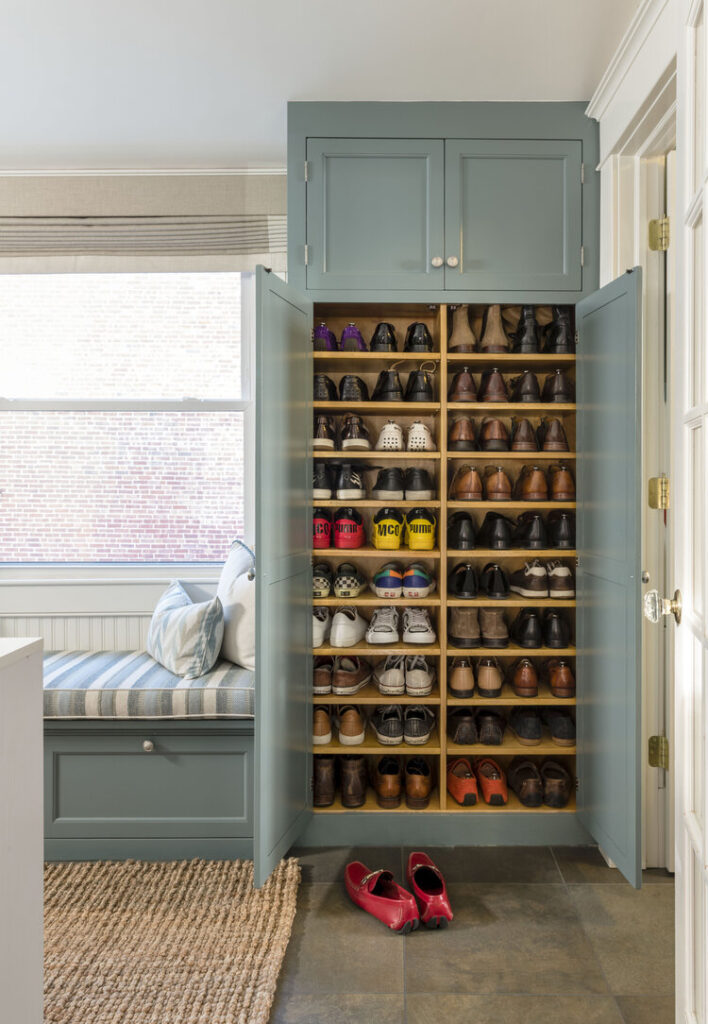
Architectural storage that blends seamlessly with your home.
Stud Wall Niche Creation
Between 16-inch on-center studs, build 3.5-inch deep niches. Line with pine boards painted to match trim for invisible storage. Perfect for displaying 6-8 curated pairs without visible racks. Critical step: Use a stud finder—niches must anchor to studs, not drywall alone.
Slanted Shelf Integration
Custom slanted shelves with acrylic lips keep shoes visible while preventing slides. Add LED strips (3000-3500K) under each tier for true-color lighting. Visual cue: If shoes slide, increase slant angle to 15 degrees—test with your heaviest pair first.
Small-Space Entryway Fixes
Solutions for apartments and tiny homes that create drop zones in 4 feet of wall space.
Bench with Arch Storage
An 18-inch high bench with 12-inch arched openings contains daily pairs while providing seating. Store slippers, running shoes, and work flats within ventilated cubbies. Pro tip: Add felt pads under bench legs to protect floors from scuffing.
Wall-Mounted Pocket System
Over-the-door fabric pockets hold flip-flops or kids’ shoes. Clear pockets enable instant ID; color-coded versions match décor. Warning: Avoid overstuffing—pockets tear when holding more than 3 pairs per compartment.
Specialty Footwear Solutions
Tailored storage for high-value or delicate shoes.
Tall Boot Organization
Use boot shapers inside 12-inch deep cubbies to prevent shaft collapse. Store boots upside-down to maintain shape while maximizing vertical space. Cedar shapers add scent control—replace annually for effectiveness.
Sneaker Collector Storage
Protect limited-edition sneakers in opaque drop-front boxes with silica gel packets. Stack boxes 6 high using barcode labels for inventory scanning. Critical mistake: Never use clear boxes—UV light fades colors over time.
Seasonal Rotation Strategy
Reduce visual clutter by rotating footwear twice yearly.
Clear Box Stacking
Store off-season shoes in labeled drop-front boxes stacked 6 high. Use barcode labels on box ends for quick scanning. Rotate boxes during wardrobe changes—store “Winter Boots” on high shelves until cold weather returns.
Woven Basket System
Seagrass baskets with lids conceal off-season shoes while adding texture. Label baskets clearly (“Summer Sandals”) and store on highest shelves. Pro tip: Place silica gel packets inside baskets to prevent moisture damage during storage.
Quick Maintenance Tips
Extend shoe life with these monthly routines.
Weight Limit Awareness
Floating shelves support max 25 pounds per linear foot—ideal for flats but insufficient for boots. For heavy collections, use stud-mounted systems rated for 50+ pounds. Visual cue: If shelves sag, redistribute weight immediately.
Protective Liner Options
Line shelves with clear silicone mats to repel pests and prevent scratches. Wash mats monthly in warm soapy water—avoid cedar planks near patent leather (oils can cause discoloration).
Transform shoe chaos into curated storage by starting small: implement one system today using materials you already own. Whether you choose copper pipe displays or under-bed bins, these shoe holder ideas prove organization isn’t about square footage—it’s about using every inch intelligently. Your perfectly matched pair awaits.


