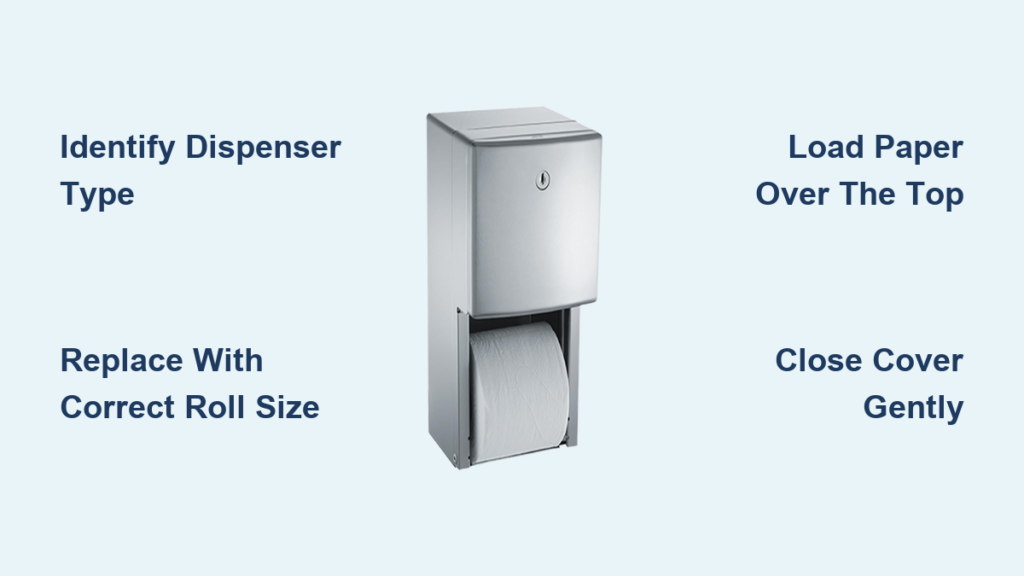
Walk into any busy office restroom at 9:15 AM and you’ll likely find at least one stall with an empty dispenser. The morning rush has struck again, and someone’s stuck waving frantically under the partition for help. Mastering how to change commercial toilet paper holder units quickly isn’t just about avoiding awkward moments—it’s essential for maintaining the professional image your workplace depends on.
Most facility managers underestimate how much these simple refills impact user experience. A well-stocked, properly maintained dispenser signals respect for visitors and employees alike. The good news? Once you know the specific steps for your dispenser type, you’ll complete most roll changes in under 30 seconds.
This guide breaks down the exact process for every major commercial holder design, from multi-flat dispensers to jumbo roll systems. You’ll learn the subtle differences that save minutes per refill and prevent the costly paper waste that plagues busy facilities.
Spot Your Commercial Dispenser Type Immediately
Before attempting to change your commercial toilet paper holder, identify which system you’re working with. Commercial restrooms typically feature one of four main designs, each requiring slightly different handling techniques. Proper identification prevents damage to the dispenser and ensures smooth operation after refilling.
Multi-Flat (Bulk Fill) Dispenser Identification
These rectangular units hold stacked, interleaved paper sheets in replaceable packs. Look for these telltale signs:
– Rectangular viewing windows showing stacked paper
– Smooth, flat front panels with no visible roll
– Side hinges or bottom latches for access
Pro tip: These dispensers almost always contain two paper packs—always replace both simultaneously to prevent uneven feeding and jams. Most commercial facilities use 2-ply tissue with approximately 250 sheets per pack.
Jumbo Roll System Recognition
Spot these high-capacity dispensers by their distinctive features:
– Large circular or square housing units
– Visible oversized rolls measuring 150m-300m in length
– Either 2¼” or 3″ core diameter visible in center
The three size variants (mini, midi, and maxi) all use identical loading methods despite different capacities. Mini rolls typically contain 150m of paper, while maxi rolls can hold up to 300m.
Cored Roll (Pendimatic) Holder Identification
These commercial units mimic domestic holders but include critical security features:
– Standard roll appearance with visible plastic end caps
– Side-loading design that secures the roll
– Smaller capacity than jumbo systems but larger than residential
The plastic end caps serve dual purposes—they prevent theft and ensure proper roll alignment within the dispenser mechanism.
Standard Commercial Roll Holder Features
Identify these basic commercial units by:
– Simple spindle design similar to residential models
– Compatibility with regular household-style rolls
– Often wall-mounted or recessed in stall walls
While simple, these require proper technique to avoid misalignment that causes paper jams and premature tearing.
Essential Tools for Efficient Commercial Holder Changes
Most commercial dispensers need zero tools for routine refills, but keep these items in your maintenance kit for optimal performance:
- Universal key (for locked dispensers in high-traffic areas)
- Microfiber cloth (for quick cleaning during changes)
- Replacement rolls/packs (always carry 2-3 spares in your cart)
- Small flashlight (for poorly lit stalls and precise alignment)
Warning: Never force open a locked dispenser. The internal mechanism breaks easily under pressure, leading to expensive repairs and extended downtime. If you don’t have the proper key, contact your facilities manager rather than risking damage.
Multi-Flat Dispenser Refill: Step-by-Step
Follow these precise steps to avoid the most common multi-flat dispenser mistakes that cause jams and wasted paper:
- Locate the latch – Usually on the bottom right or left side of the unit
- Press and hold the small release button while pulling cover forward
- Remove empty packs – Lift straight up from bottom supports without tilting
- Insert new packs – Slide into side rails until fully seated with first sheet positioned correctly
- Pull first sheet through dispensing slot before closing
- Close cover firmly until latch clicks into place
Critical mistake to avoid: Forgetting to pull the first sheet through before closing. This prevents the automatic feed mechanism from working and requires you to restart the entire process. Commercial dispensers are designed so users pull one sheet to present the next—proper initial sheet placement is essential.
Jumbo Roll Replacement: Perfect on First Try
Mini/Midi/Maxi Roll Changes Made Simple
- Identify the hinge – Look for subtle seam lines indicating the opening mechanism
- Press release tab while swinging door open (some require upward motion)
- Lift old roll straight up from spindle—don’t twist or tilt
- Remove plastic core from previous roll if it remains stuck
- Slide new roll onto spindle until centered between housing walls
- Thread paper through serrated slot—critical for non-perforated rolls
- Close door firmly until it latches with audible click
Pro tip: For non-perforated rolls, tear against the built-in serrated edge rather than trying to tear by hand. This creates a clean edge that feeds properly for the next user.
Core Size Verification Checklist
Before installation, quickly confirm compatibility:
– 2¼ inch cores fit most standard jumbo dispensers
– 3 inch cores require specific high-capacity units
– Mini rolls (150m) work in any jumbo holder
– Maxi rolls (300m) may not fit older models—check manufacturer specifications
Using the wrong core size causes misalignment, uneven feeding, and premature paper jams that frustrate users and waste product.
Cored Roll Holder Updates: Security Without Hassle

These commercial units follow domestic patterns but with added security features requiring specific handling:
- Lift spindle arm upward until it stops—don’t force beyond natural resistance
- Slide old roll off spindle completely
- Remove plastic end caps if they remain stuck in the mechanism
- Insert new roll with caps properly seated against housing
- Lower spindle gently back into position—slamming causes misalignment
- Pull paper through slot ensuring proper feeding direction
Expert note: Plastic end caps prevent theft but wear out every 6-8 months. Replace them during roll changes to maintain smooth operation. Worn caps cause rolls to shift during use, creating feeding problems.
Standard Commercial Roll Quick Swap
Master this fastest method for basic holders to minimize downtime:
- Lift spring-loaded arm completely—some require quarter-turn rotation
- Slide off empty tube without dropping it (prevents damage to housing)
- Push new roll onto spindle ensuring proper alignment
- Release arm slowly—let it settle into position
- Adjust roll position for even dispensing by gently rotating the roll
Prevent Costly Loading Errors Immediately

Correct Paper Direction Every Time
Always load rolls so paper feeds over the top toward the user. Under-loading causes sheets to tear prematurely and creates frustrating user experiences. In commercial settings where multiple people use the same stall, proper loading direction prevents 90% of jam complaints.
Multi-Flat Unit Capacity Limits
These systems accept exactly two packs. Adding a third prevents proper closure and damages the dispensing mechanism. Overfilling is the #1 cause of multi-flat dispenser failures in high-traffic facilities.
Viewing Window Utilization
Use the transparent panels to check levels without opening. Refill when one pack remains to avoid emergency situations. This simple habit reduces dispenser openings by 50%, extending the unit’s lifespan.
Daily Maintenance Checks for Flawless Operation
Establish this simple routine to prevent problems before they occur:
Morning inspection (2 minutes per restroom):
– Check all dispensers through viewing windows
– Note any empty or low units
– Schedule refills before peak usage periods
Quick cleaning during changes:
– Wipe stainless steel with damp cloth (no chemicals)
– Dry thoroughly to prevent water spots
– Clean paper dust from dispensing slots using a soft brush
Weekly deep check (10 minutes per restroom):
– Test all latches and hinges for smooth operation
– Replace worn end caps on cored rolls
– Verify paper feeding smoothly by testing each dispenser
Extend Your Dispenser Lifespan by 50%
Simple habits prevent costly replacements and maintain professional appearance:
- Close gently – Slamming covers warps plastic hinges over time
- Clean quarterly – Built-up paper dust causes jams and premature wear
- Replace worn parts – End caps and springs cost pennies; new dispensers cost hundreds
- Train staff – 30-second demonstrations prevent user damage from improper handling
Final Note: Mastering how to change commercial toilet paper holder systems transforms a daily chore into a smooth, professional routine. The 30 seconds you spend per refill prevents hours of user frustration and maintains the polished image your facility demands. Start by identifying your dispenser types today—walk through with this guide and note which systems you have. Stock appropriate refills for each, and you’ll never face another empty-stall emergency. For stainless steel units, remember to avoid soap or chemical cleaners—simply wipe with a damp cloth and dry thoroughly after each cleaning. Proper maintenance ensures your dispensers function reliably while presenting a clean, professional appearance that reflects well on your entire facility.