
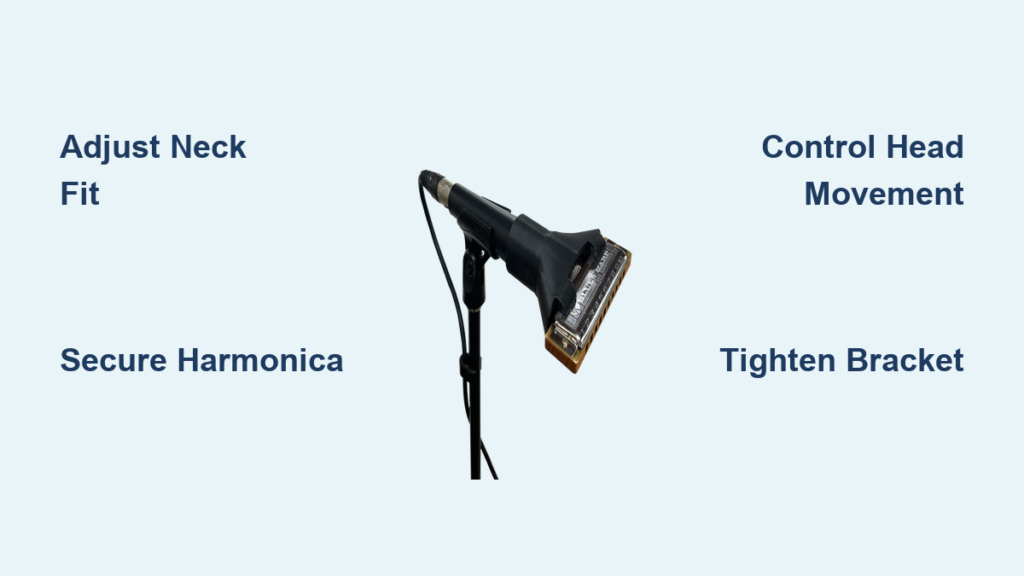
You’re strumming your guitar, building the perfect rhythm, and suddenly you want to add that soulful harmonica riff—but your hands are busy. A properly set up harmonica holder solves this problem instantly, positioning your harmonica exactly where you need it with just a subtle head movement. Mastering how to use a harmonica holder transforms you from a single-instrument player into a versatile one-person band, whether you’re channeling Bob Dylan’s folk style or Muddy Waters’ blues sound.
Most beginners struggle with awkward positioning and instrument instability when they first try a harmonica holder. But with the right setup techniques and practice strategies, you’ll soon play complex harmonica parts while simultaneously handling your primary instrument with confidence. This guide reveals the exact steps professional musicians use to position, adjust, and play with a harmonica holder for seamless musical integration.
Choose Your Harmonica Holder Type
Spring-Loaded Basic Models
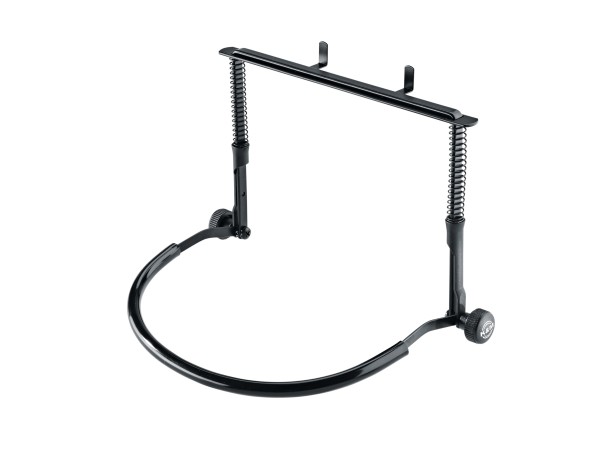
The most affordable harmonica holders use a simple spring mechanism that clamps your harmonica between two metal arms. These racks rest comfortably on your shoulders with a curved frame that wraps around your neck. The U-shaped bracket at the front grips your harmonica securely while keeping it positioned 1-2 inches from your mouth—perfect for beginners learning how to use a harmonica holder.
Professional Adjustable Holders
Serious musicians invest in professional models with multiple pivot points that let you fine-tune every angle. These holders feature rubber-coated contact points that prevent scratches on your harmonica while providing rock-solid stability. The enhanced adjustability means you can achieve the perfect position whether you’re standing with a guitar or sitting at a piano—critical when you need to use your harmonica holder for extended performances.
Specialty and Custom Options
Some manufacturers create holders for specific harmonica types—diatonic, chromatic, or tremolo models. Custom racks might include quick-release mechanisms for fast key changes or extra padding for marathon jam sessions. Multi-harmonica holders let advanced players switch keys without stopping the music, giving you flexibility when you use a harmonica holder in complex arrangements.
Essential Setup Components
Frame Structure
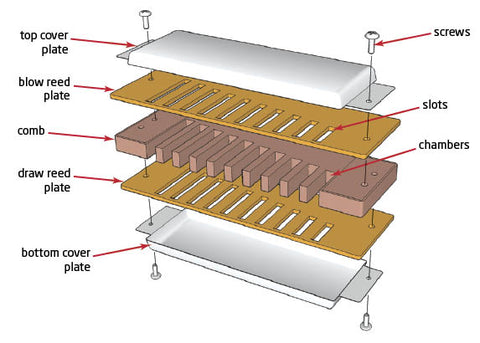
The main frame forms the backbone of your harmonica holder. This curved metal or plastic structure distributes weight across your shoulders while keeping the harmonica stable. Quality frames maintain their shape over time without bending or warping—essential when you need your harmonica holder to stay put during energetic performances.
Harmonica Bracket
Your harmonica sits in a spring-loaded bracket with protective rubber sleeves. These sleeves prevent scratches while ensuring a firm grip. The bracket should hold your harmonica level and centered, with easy access for quick changes between songs. Never skip checking these rubber sleeves—worn padding causes frustrating instrument movement when you use a harmonica holder.
Neck Support System
The padded neck brace at the back adjusts to fit different body sizes. This component uses sliding or ratcheting mechanisms to customize the fit, ensuring the holder stays put without restricting breathing or movement. When properly adjusted, you’ll forget you’re wearing it within minutes of learning how to use a harmonica holder correctly.
Step-by-Step Holder Assembly
Initial Inspection and Prep
Before your first use, examine every component for damage or missing parts. Remove any packaging materials and identify the front bracket where your harmonica will mount. New holders sometimes have protective coating that needs removal—always clean contact points to prevent slippage when you use a harmonica holder.
Perfect Neck Fit
Place the holder around your neck with the bracket facing forward. Adjust the neck brace until the frame rests comfortably on your shoulders—you should feel secure pressure without tightness. The holder shouldn’t restrict breathing or dig into pressure points during extended use. Test this by taking deep breaths—if you can’t breathe freely, readjust before proceeding.
Secure Harmonica Mounting
Open the bracket by pressing the spring-loaded arms apart. Insert your harmonica with the numbered side up and holes facing your mouth. Release the arms slowly to ensure a firm grip—your harmonica should sit level without wobbling or tilting. Check alignment by looking in a mirror—the harmonica must be perfectly parallel to your lips for comfortable playing.
Precise Positioning Setup
With your harmonica mounted, adjust three key elements:
– Vertical position: Set so the harmonica sits 1-2 inches from your lips in neutral head position
– Horizontal distance: Position close enough that slight head movement brings it to your mouth
– Angle alignment: Ensure the harmonica sits parallel to your lips for comfortable playing
Master Hands-Free Playing Techniques
Controlled Head Movement
Effective harmonica holder use demands precise head control. Practice small, deliberate movements rather than large swings. Your head should move forward to contact the harmonica and back to release—like a gentle nodding motion that feels natural over time. Start with simple exercises: play a single note while strumming basic guitar chords, focusing on minimal head movement.
Breath Control Mastery
Without hands creating air-tight seals, focus on consistent breathing patterns. Use your diaphragm for steady pressure instead of facial muscles. Practice maintaining single notes while strumming guitar chords or playing piano rhythms. Pro tip: inhale through your nose while playing to maintain airflow when you use a harmonica holder.
Advanced Note Bending
Bending notes becomes trickier without hand support. Develop tongue-based techniques by sliding your tongue forward and backward while maintaining head contact. Throat control becomes crucial—practice achieving bends using only your vocal tract muscles. Start with simple bends on hole 2 draw before attempting complex techniques.
Solve Common Holder Problems
Eliminate Harmonica Movement
If your harmonica shifts during play, tighten all adjustment points systematically. Add small rubber bands or Velcro strips for extra security. Some players wrap electrical tape around bracket contact points to increase grip without damage. This quick fix solves 90% of stability issues when you use a harmonica holder.
Prevent Neck Fatigue
Shoulder or neck pain indicates poor weight distribution. Add padding to contact points or adjust the neck brace for better support. Take regular breaks during practice—build endurance gradually rather than pushing through discomfort. Wear your holder for just 10 minutes during initial practice sessions before increasing duration.
Fix Positioning Struggles
Can’t find a comfortable angle? Experiment with every adjustment combination systematically. Consider your primary instrument’s height—guitar players need different positioning than seated pianists. The harmonica should align naturally without forcing your head into awkward angles.
Maintain Peak Performance
Regular Cleaning Routine
Wipe down your holder after each use with a soft, slightly damp cloth. Focus on areas that contact skin or your harmonica. Dry thoroughly to prevent rust on metal components—especially important after sweaty performances. Monthly deep cleaning extends your harmonica holder’s lifespan significantly.
Lubrication Schedule
Monthly lubrication keeps adjustment mechanisms smooth. Use light machine oil on metal joints and silicone lubricant on plastic parts. Avoid over-lubricating, which attracts dirt and creates sticky operation. Just one drop per joint is sufficient when maintaining how to use a harmonica holder equipment.
Proper Storage
Hang your holder or store it flat to maintain the frame’s shape. Keep it away from extreme heat or cold, which can warp plastic components or weaken spring tension. Dry storage prevents rust and corrosion—never toss it in your instrument case loosely.
Build Coordination and Endurance
Basic Coordination Exercises
Start with simple patterns: play a C major scale on harmonica while strumming a basic G-C-D progression on guitar. Focus on breathing patterns that complement both instruments. Begin with 5-minute sessions and gradually increase duration. This foundational exercise builds the muscle memory you need when you use a harmonica holder.
Progressive Difficulty Training
Advance through these stages:
– Simple melodies over steady chord rhythms
– Syncopated patterns between instruments
– Key changes without stopping
– Songs showcasing both instruments equally
Safety and Troubleshooting Guide
Quick Problem Solutions
| Problem | Instant Fix |
|---|---|
| Holder slides around | Tighten neck adjustment and check shoulder fit |
| Harmonica tilts down | Adjust bracket angle or add grip material |
| Can’t reach harmonica | Lower vertical position or angle bracket forward |
| Harmonica buzzes | Tighten bracket grip or check for loose components |
Physical Safety First
Never overtighten adjustment mechanisms—this causes injury and equipment damage. Stop immediately if you feel numbness or tingling. Sharp edges should be filed smooth or covered with tape to prevent cuts. Your comfort directly affects your performance when you use a harmonica holder.
Mastering how to use a harmonica holder transforms your musical capabilities almost overnight. Start with proper setup, build coordination through targeted exercises, and soon you’ll seamlessly integrate harmonica into your performances without missing a beat on your primary instrument. Practice with your holder for just 15 minutes daily and within weeks, hands-free harmonica playing will feel completely natural—unlocking new creative possibilities in your music. The key is consistent practice with proper technique, turning what initially feels awkward into an extension of your musical expression.


