

Your butcher block knife holder silently traps food oils, moisture, and bacteria every time you slide in a knife. Left unaddressed, this buildup dulls blades, creates stubborn odors, and risks cross-contamination—especially in the dark, cramped slots where crumbs and acidic residues fester. Unlike plastic holders, wood’s porous nature absorbs contaminants, making regular deep cleaning non-negotiable for food safety. The good news? This targeted how to clean a butcher block knife holder process eliminates grime in under an hour using kitchen-safe supplies. You’ll restore your block’s hygiene without warping the wood or damaging knife edges.
Ignoring deep cleaning turns your holder into a bacterial breeding ground. Hardwood blocks (typically maple, walnut, or bamboo) develop micro-cracks from knife insertion, trapping moisture that invites mold. Worse, acidic food particles like tomato or citrus residues accelerate wood degradation. By following this precise method, you’ll revive your holder’s appearance, extend knife life, and prevent musty kitchen smells. Let’s tackle the hidden grime where your knives live.
Empty and Inspect Your Knife Holder Thoroughly
Remove all knives immediately and place them on a dry towel away from children or pets. Hold the block upside-down over your trash can and tap the base firmly 3-4 times—watch coffee grounds, dried herbs, and other debris fall out. This dry removal prevents pushing contaminants deeper during wet cleaning.
Spot Hidden Damage With a Visual Scan
- Check for black spots indicating mold growth in damp slots
- Run fingers along slot edges to feel for splinters or cracks
- Sniff each opening for sour odors signaling bacterial growth
- Examine the base for sticky residue from countertop spills
Test Slot Integrity Before Cleaning
Insert one knife into each slot. Note any that feel unusually tight (swollen wood) or loose (worn slots). Tight slots need moisture control during cleaning; loose slots may require future conditioning. This step prevents forcing knives into compromised wood that could splinter.
Gather Wood-Safe Cleaning Supplies Only

Critical tools you absolutely need
– Soft-bristled bottle brush or pipe cleaners (never steel wool)
– Vacuum with brush attachment or compressed air can
– Two microfiber cloths (one damp, one dry)
– Food-grade mineral oil (labeled “for food contact”)
– Cotton swabs for slot openings
Dangerous items that ruin wood
– Bleach or ammonia-based cleaners (strip natural oils, causing cracks)
– Dish soaps with citrus oils (acidic residues eat into wood grain)
– Excessive water (soaking warps blocks within 20 minutes)
– Heat guns or hair dryers (create uneven drying that splits wood)
Remove Dry Debris From Every Slot
- Tap the block upside-down over trash until no more crumbs fall.
- Blast slots with compressed air in 2-second bursts—hold 6 inches away.
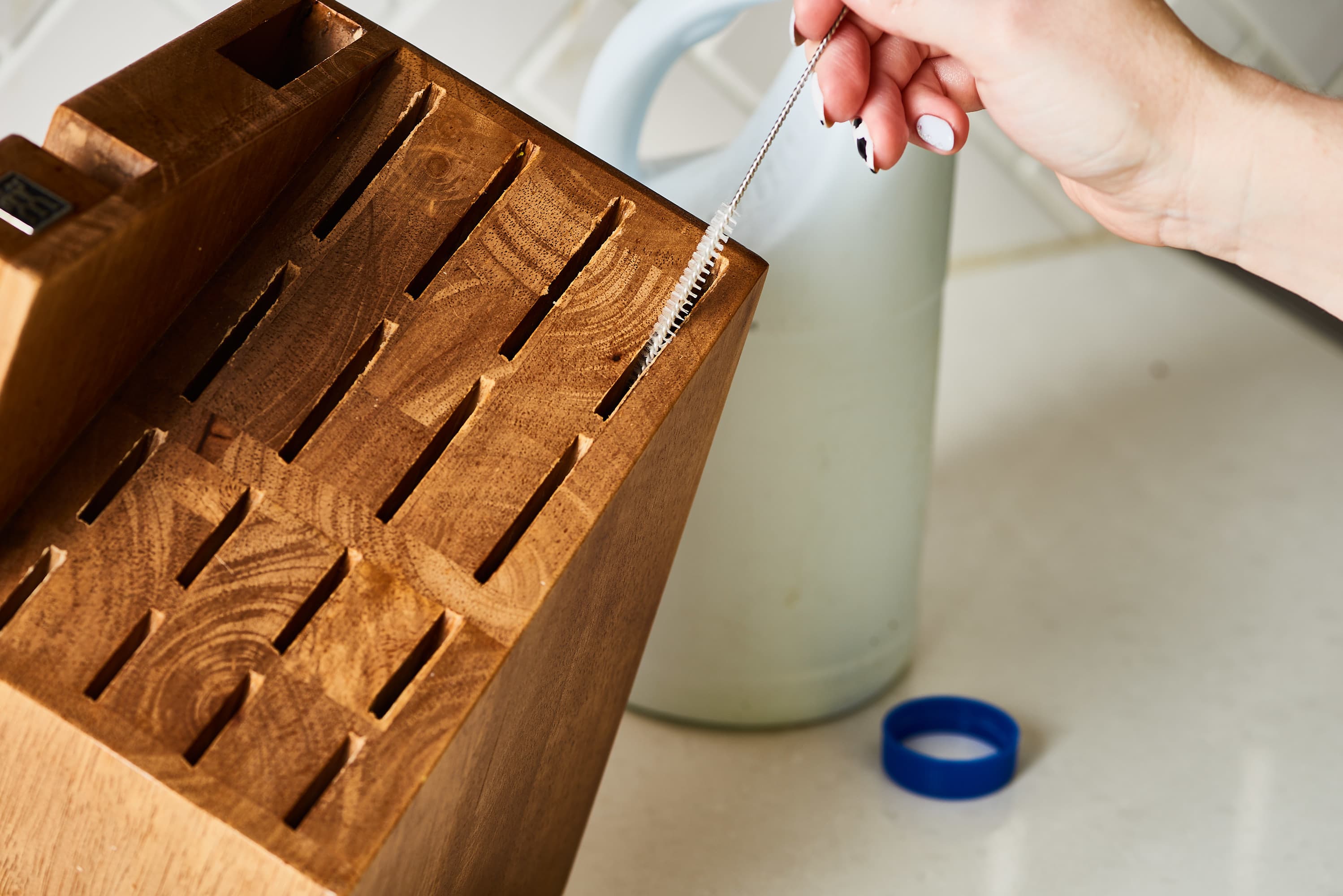
- Thread a pipe cleaner through each slot; replace when it emerges dirty.
- Shine a flashlight into slots to spot hidden particles; repeat cleaning until clear.
Pro tip: Tilt the block at 45 degrees under bright light. Shadows highlight trapped debris invisible from straight-on angles. Skip this dry phase, and wet cleaning will turn crumbs into sticky paste cemented inside slots.
Wipe Exterior Surfaces Without Water Damage
Mix two cups warm water with exactly two drops of unscented dish soap. Dampen one cloth until it’s barely moist—wring until no drips form. Wipe the entire block following the wood grain, applying light pressure. Focus on the base where countertop grease accumulates. Never soak the wood; excess moisture seeps into slots within seconds.
Erase Tough Stains Safely
- Sticky syrup spills: Dab with mineral oil on a cloth, wait 3 minutes, then wipe.
- White water rings: Swab with 1:4 vinegar-water mix using a cotton swab, then dry immediately.
- Dried food crust: Gently rub with a dry bottle brush—no liquid needed.
Deep-Clean Slot Interiors Step by Step
- Wrap a microfiber strip around a chopstick (use thin cloth to avoid tearing).
- Lightly mist the cloth with your soap solution—never saturate.
- Rotate the chopstick inside each slot 8-10 times, changing cloth sections when soiled.
- Insert a dry cloth-wrapped stick to absorb residual moisture.
Track your progress with this slot checklist:
– Slot 1: Clean ✔ | Slot 2: Clean ✔ | Slot 3: Clean ✔
(Continue for all slots)
Critical: Work slowly. Rushing pushes debris deeper, requiring repeat cleaning. If you smell dampness after wiping, slots aren’t dry enough for sanitizing.
Sanitize Only for Mold or Odors
Eliminate Mold in Affected Slots
- Spray 3% hydrogen peroxide directly into moldy slots (not the entire block).
- Wait 10 minutes—never exceed 15 minutes to avoid wood bleaching.
- Wipe with a barely damp cloth, then dry immediately with compressed air.
Kill Lingering Odors Naturally
- Pour baking soda into smelly slots, filling halfway.
- Leave overnight; vacuum out thoroughly in the morning.
- Do not use vinegar here—it reacts with baking soda, reducing odor-fighting power.
Dry Completely Before Oiling
Moisture trapped inside slots causes warping and mold within 24 hours. Stand the block on its side on a wire rack in a well-ventilated area. Place a fan 3 feet away on low speed for 2 hours. Test dryness by pressing your palm against slots—they should feel room-temperature, not cool. If dampness persists, extend drying time by 30-minute increments.
Warning: Skipping this step invites bacterial growth. Never rush to oil a damp block—oil seals in moisture, accelerating damage.
Condition With Food-Grade Mineral Oil
A dry block looks pale and feels rough; oil restores water resistance. Apply liberally to all surfaces using a cloth. For slots, wrap cloth around a chopstick dipped in oil. Let it soak 20 minutes, then wipe off excess with a dry cloth. Cure overnight before reinserting knives—oil needs 12 hours to penetrate wood pores.
Oil Frequency Based on Use
- First month: Oil weekly (new wood absorbs heavily)
- Normal use: Oil monthly or when wood looks chalky
- High humidity: Oil bi-weekly to prevent moisture absorption
Prevent Grime Buildup Between Cleanings
- Dry knives completely before storage—no visible moisture on blades.
- Air-dry the holder weekly by standing it on its side for 60 minutes.
- Rotate knives among slots to prevent compression in one area.
- Wipe spills immediately with a dry cloth—never let liquids pool.
Pro tip: Place silica gel packets in your knife drawer during humid months to absorb ambient moisture.
Fix Common Problems Fast
| Issue | Immediate Solution |
|---|---|
| Sticky residue after oiling | Wipe with dry cloth—excess oil wasn’t removed |
| Knives won’t slide smoothly | Let block dry in low-humidity area for 24 hours |
| Musty smell returns | Repeat baking soda treatment + check kitchen humidity |
| Dark spots in slots | Lightly sand with 220-grit paper, then re-oil |
Replace Your Holder Immediately When
- Cracks extend into knife slots (creates bacterial hideouts)
- Mold reappears within 72 hours of deep cleaning
- Slots are so worn that knives wobble or fall out
- Wood feels spongy when pressed (indicates water damage)
A well-maintained butcher block knife holder lasts decades. Schedule deep cleans every 3-4 months—set a phone reminder now. For heavy-use kitchens, monthly cleaning prevents stubborn grime. Remember: how to clean a butcher block knife holder isn’t about harsh chemicals but consistent, wood-friendly care. Within an hour, you’ll eliminate hidden hazards while protecting your knives. The next time you grab a blade, you’ll know its home is truly clean.