Your morning coffee tastes unexpectedly bitter, the drip rate has slowed to a frustrating trickle, or you spot stubborn brown stains clinging to your filter basket. These issues almost always trace back to a neglected coffee filter holder—the unsung hero silently accumulating rancid oils, mineral scale, and trapped grounds until it ruins every brew. Whether you’re using a stainless-steel espresso basket, plastic pour-over cone, or French-press plunger, this guide delivers the exact cleaning protocols to restore peak performance. You’ll learn how to eliminate off-flavors, prevent clogs, and extend your equipment’s lifespan with targeted routines that take minutes, not hours.
Most coffee drinkers rinse their filter holder after brewing but miss critical steps that cause long-term damage. Left unaddressed, coffee oils turn rancid within 24 hours, while mineral deposits from hard water create permanent scale buildup. This comprehensive walkthrough covers daily, weekly, and monthly techniques for every filter type—including espresso portafilters, French-press assemblies, and aluminum baskets—using only household items or affordable specialty cleaners. By the end, you’ll have a crystal-clear filter holder that extracts pure, balanced coffee without metallic aftertastes or uneven flow.
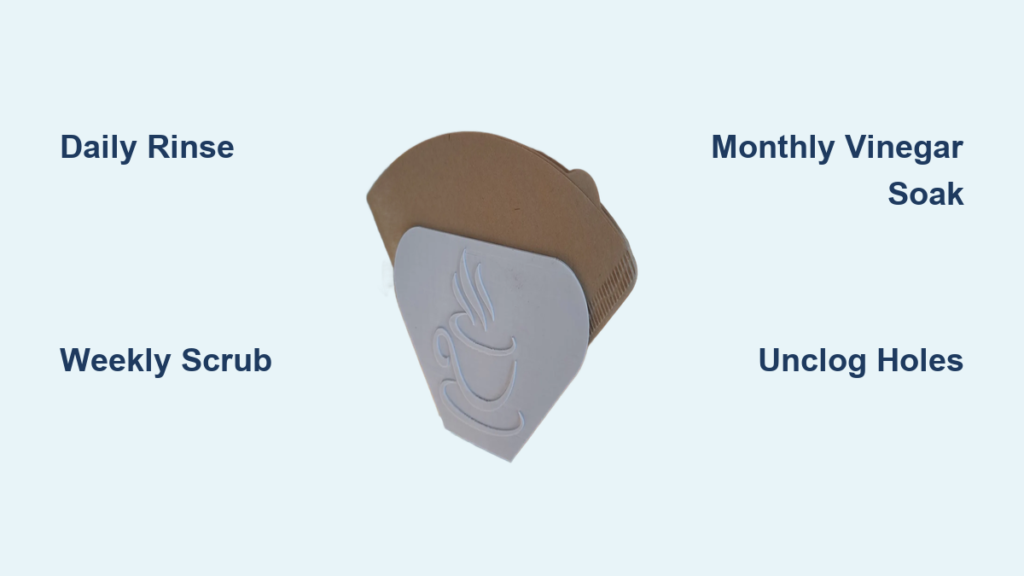
Daily Rinse Protocol After Every Brew
Skipping this 30-second ritual guarantees future cleaning headaches. Hot water alone can’t dissolve sticky coffee oils that accumulate with each brew, leading to rancid flavors within days. Implement this immediate post-brew sequence to prevent 90% of problems.
Knock, Rinse, and Inspect in Under 30 Seconds
- Knock firmly over compost or trash to dislodge compacted grounds—never scrape with metal tools that scratch perforations
- Rinse underside first under hot tap water for 15 seconds, watching for dark streaks indicating trapped oils
- Flip and rinse interior until water runs completely clear (cloudy water = immediate deep-clean needed)
- Critical visual check: Hold basket to light—any hole with reduced visibility requires urgent unclogging
Pro Tip: Keep a soft baby bottle brush beside your sink. Its narrow bristles reach into tiny perforations without damaging stainless steel or aluminum surfaces. For espresso baskets, back-flush immediately after each shot by running hot water through the portafilter while empty.
Weekly Deep Scrub Routine for Rancid Oils

Daily rinsing prevents major buildup but can’t eliminate sticky coffee oils that turn bitter within 48 hours. This weekly ritual dissolves residues that cause off-flavors while preserving your basket’s integrity.
Three-Minute Oil-Dissolving Process
- Lather a soft-bristle brush with mild dish soap (avoid citrus-based cleaners on aluminum)
- Scrub both faces using circular motions, focusing on the underside where oils pool in microscopic crevices
- Rinse until squeaky-clean—rub your finger across the surface; any slipperiness means residual oils remain
- Air-dry upright on a rack (never towel-dry aluminum baskets—lint fibers snag on perforations)
Time Saver: For stubborn rancid oil stains, apply baking-soda paste (1 tbsp baking soda + drops of water) before scrubbing. The mild abrasion lifts residues without scratching. Always inspect for warping after drying—any rocking motion when placed on a flat surface means replacement is needed.
Monthly Vinegar Soak Method for Mineral Scale
Hard water minerals create invisible scale that clogs perforations and alters extraction. This overnight treatment dissolves deposits without harsh chemicals, working while you sleep.
Perfect Vinegar Solution Setup
- Mix 1 part white vinegar : 2 parts warm water in a container large enough to fully submerge your basket
- Soak for 8–12 hours (start before bed for next-morning use)
- Critical Warning: Never use undiluted vinegar—it can damage aluminum baskets over time
Next-Morning Activation:
1. Remove basket and gently scrub with soft brush—loosened debris should rinse away easily
2. Rinse five times with fresh water, sniffing for vinegar odor (persistent smell = repeat rinsing)
3. Validation test: Brew a pot of plain water—any vinegar taste means insufficient rinsing
Commercial Shortcut: For espresso baskets, Urnex Cafiza cuts soak time to 20 minutes. Use 1 tsp per 250ml hot water, then run a blank shot to purge residues.
Espresso Portafilter Basket Cleaning Steps

A single clogged hole in your espresso basket causes channeling—where water bypasses coffee grounds—resulting in sour, weak shots. Precision cleaning is non-negotiable for quality extraction.
Safe Basket Removal Without Damage
- Cool completely before removal—hot metal contracts and grips tighter in the portafilter
- Tap firmly over a knock box, then use a spoon handle for leverage under the rim (standard baskets)
- For bottomless portafilters: Push evenly from the basket bottom using thumbs
- Never pry with metal tools—scratches create permanent extraction channels
Hole-by-Hole Unclogging Protocol
- Immediate post-shot rinse: Flush under hot water for 10 seconds
- Weekly soak: Remove basket, submerge in Cafiza solution for 20 minutes
- Detail work: Use a toothpick only on stainless steel to clear individual holes—aluminum scratches permanently
- Final inspection: Hold to light—all holes must be perfectly round and unobstructed
Pro Warning: Aluminum portafilter baskets require vinegar soak (not Cafiza) and immediate drying to prevent oxidation.
French-Press Filter Assembly Deep Clean
The triple-layer screen system traps fine sediment but easily warps during cleaning, creating bypass channels that yield gritty coffee. Proper disassembly is critical.
Disassembly Without Reassembly Errors
- Unscrew plunger rod from lid (lefty-loosey motion)
- Slide out filter stack in order: spring plate → mesh screen → cross plate
- Snap a photo before removal—reassembly sequence is crucial for flat seating
Mesh-Screen Preservation Technique
- Soak all metal parts in 1:1 vinegar-water for 10 minutes (no longer—prolonged acid exposure weakens mesh)
- Gentle brushing only: Check for bent wires that create extraction channels
- Reassemble with firm pressure—overtightening warps the mesh; mesh must sit perfectly flat when compressed
Critical Check: After reassembly, press the plunger through hot water—if resistance feels uneven, disassemble and realign components.
Aluminum Basket Corrosion Fix and Prevention
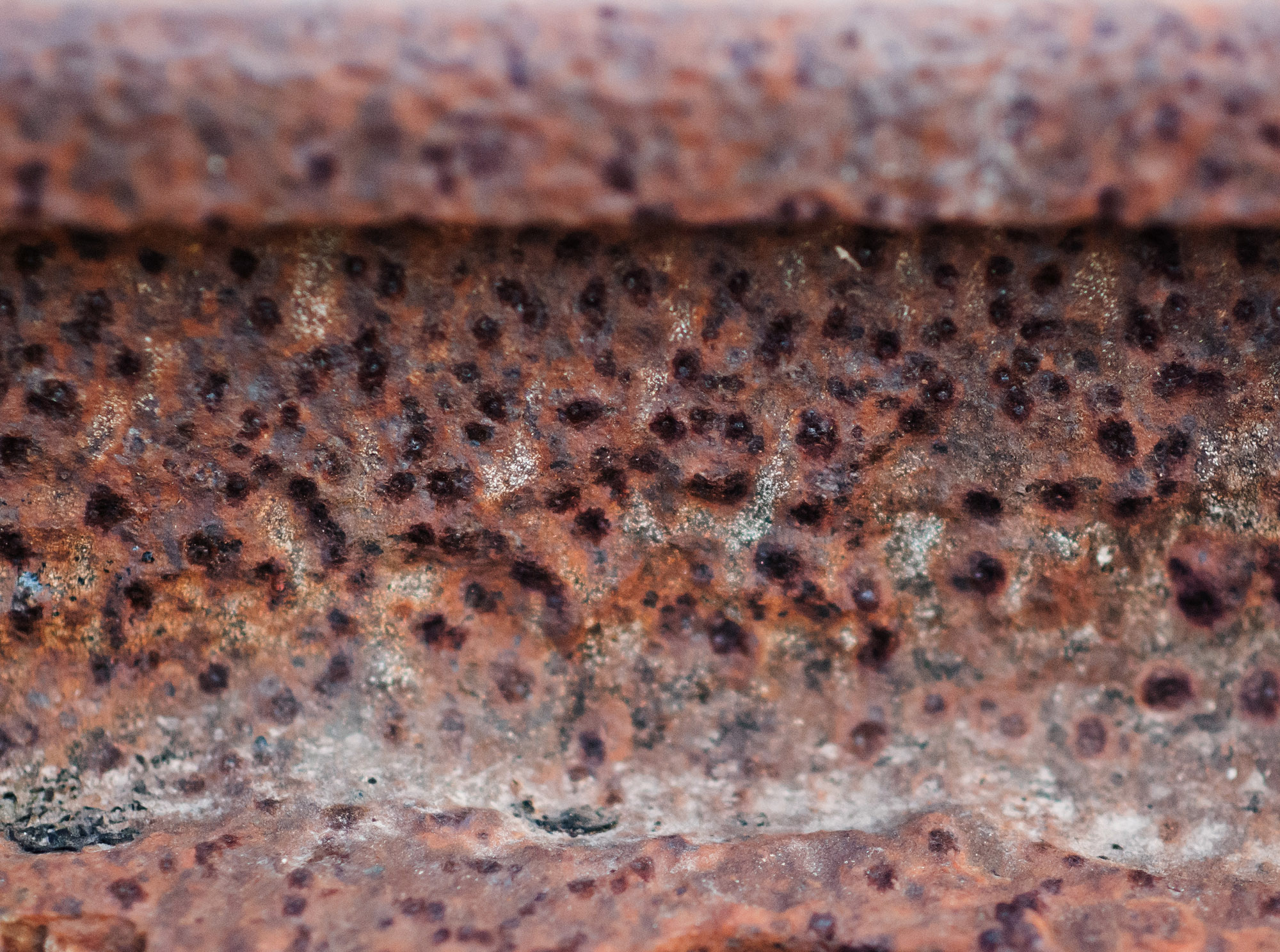
Gray etching or white powder on aluminum baskets isn’t dangerous but ruins flavor. This targeted approach removes corrosion without accelerating damage.
Identifying Aluminum Oxide vs. Permanent Damage
- Safe to clean: Gray, etched patches under residue or white chalky film after drying
- Replace immediately: Enlarged perforations or holes with jagged edges (indicates metal fatigue)
Non-Damaging Restoration Process
- Use 240-grit wet-dry sandpaper only on the interior surface with light circular motions
- Rinse and dry immediately after sanding—never leave wet aluminum exposed
- Prevent recurrence: Add 0.7 mL white vinegar per pot to brewing water if your local pH exceeds 7.5
Absolute Never: Steel wool (removes protective oxide layer) or dishwasher use (alkaline detergents accelerate corrosion 300%).
Troubleshooting Common Filter Holder Issues
Solve these four critical problems with precision fixes—no more guessing why your coffee tastes wrong.
Bitter, Rancid Taste Fix
- Cause: Oils turned rancid in basket pores within 48 hours
- Solution: Overnight vinegar soak followed by baking-soda paste scrub (5 minutes contact time)
Slow or Uneven Drip Resolution
- Cause: Microscopic grounds clogging perforations
- Solution: Soak 30 minutes, then use a fine needle to clear each hole individually while holding basket to light
Metallic Aftertaste Elimination
- Cause: Aluminum oxidation or soap residue
- Solution: Re-clean with lemon juice soak (1:1 with hot water, 10 minutes), triple-rinse, and immediate drying
Stuck Basket Emergency Fix
- Cause: Dried coffee acting as glue between basket and portafilter
- Solution: Submerge portafilter in hot water for 5 minutes, then gently pry basket loose with a spoon handle
Maintenance Schedule by Usage Level
Tailor your cleaning frequency to actual use—over-cleaning damages equipment, while under-cleaning ruins coffee.
Home Brewers (1-2 cups daily)
– Daily: Knock and hot-water rinse
– Weekly: Soap scrub with soft brush
– Monthly: Vinegar soak overnight
Office Machines (3-5 pots daily)
– After each pot: Quick brush under hot water
– Weekly: Full disassembly and vinegar soak
– Monthly: Baking-soda paste treatment for stubborn residues
Café Environments
– After each shot: Knock, rinse, back-flush
– Nightly: Cafiza soak for all baskets
– Monthly: Replace worn gaskets and inspect baskets for warping
Final Note: Your coffee filter holder now delivers clean, balanced extraction—no more bitter notes or slow drips. Implement this routine consistently, and every cup will taste as the roaster intended. For immediate reference, laminate the Quick Reference Card from this guide and attach it near your brewing station. Remember: a pristine filter holder isn’t about equipment care—it’s the secret to unlocking your coffee’s true flavor potential, cup after cup.