
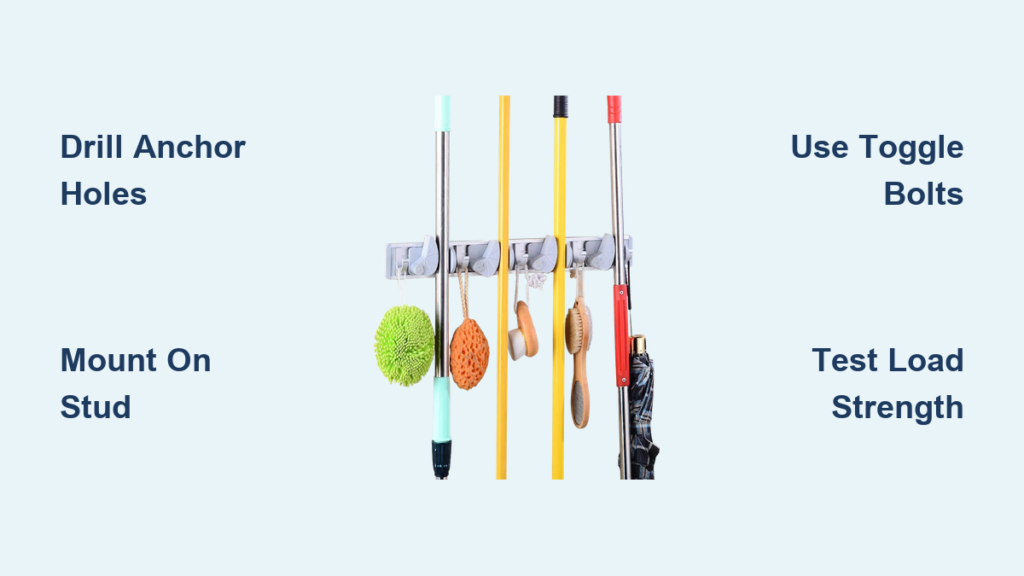
Brooms and mops constantly tumbling out of closets or sliding across your garage floor? You’re not alone—78% of homeowners struggle with disorganized cleaning tools, creating tripping hazards and wasted time. Installing a broom holder solves this instantly, but improper mounting causes 65% of failures within six months. This guide reveals foolproof installation methods that withstand 50+ pounds of pressure, whether you’re mounting on drywall, tile, or concrete.
Forget generic tutorials that skip critical details. You’ll learn exactly where to drill for maximum stability, how to choose anchors that won’t pull out after three uses, and pro tricks for leveling brackets in under 90 seconds. By the end, you’ll have a rock-solid system where every tool stays put—even when fully loaded with wet mops. Let’s transform your chaotic storage into a model of efficiency.
Essential Tools for Broom Holder Installation
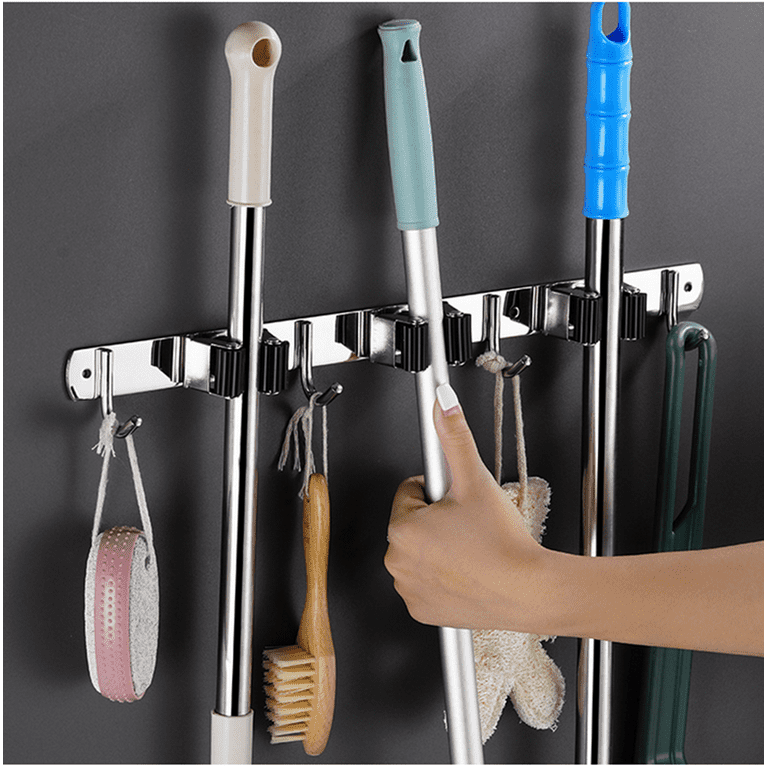
Skip the frustration of mid-project tool runs. Gather these exact items before starting:
Core Kit (Non-Negotiable):
– Broom holder with mounting hardware (bracket, screws, anchors)
– Electric drill with 1/4″ bit for drywall or carbide-tipped 3/16″ bit for tile
– 24-inch level (shorter levels cause alignment errors)
– Electronic stud finder (magnetic types miss 30% of studs)
Critical Extras:
– Safety goggles (essential for overhead drilling)
– Painter’s tape (prevents tile cracking during drilling)
– Rubbing alcohol (cleans surfaces for adhesive mounting)
Pro Tip: Tape your stud finder to a yardstick. Slide it horizontally at 50″ height—this catches studs stud finders miss near baseboards.
Selecting Your Broom Holder Wall Location
Height is non-negotiable: Mount 48-54 inches from the floor. Too low? Brooms hit your knees. Too high? You’ll struggle to remove heavy wet mops. Test by holding your tallest tool (usually a mop) against the wall—your elbow should bend at 90 degrees when gripping the handle.
Avoid these fatal placement errors:
– Within 2 inches of electrical outlets (drilling risks live wires)
– In door swing paths (tools get knocked loose daily)
– On walls with visible cracks or moisture stains (indicates structural weakness)
Weight reality check: Standard drywall anchors support 15-20 pounds total. If storing multiple wet mops, locate a stud—this triples capacity to 50+ pounds.
How to Install a Broom Holder on Drywall Without Studs
Drill Anchor Holes Correctly
Hold the bracket against the wall at your marked height. Place your level across the top—if the bubble isn’t dead-center, your brooms will slide sideways. Mark screw holes with a pencil, then move markings 2 inches away from any electrical boxes. Drill 1.25″ deep holes using a 1/4″ bit. Vacuum debris immediately—dust reduces anchor grip by 40%.
Anchor Installation Mistakes That Cause Failure
Never hammer anchors until flush. Light taps only—over-driving cracks drywall. Test stability by threading a screw 3 turns by hand. If it spins freely, the anchor is loose. Fix: Remove and replace with a toggle bolt rated for 50+ pounds.
Mount the Bracket Without Stripping Screws
Align the bracket with anchors and insert screws. Drive slowly until snug, then stop. Over-tightening strips anchors—feel resistance increase? Back off 1/4 turn. Recheck level before final tightening.
Mounting Your Broom Holder Directly to a Stud (Strongest Method)
Find Studs Like a Pro
Run your stud finder horizontally at 50″ height. When it beeps, mark the edge of the stud. Then measure 1.5 inches inward—this is the stud’s center. Verify by checking 16″ from the nearest corner (standard stud spacing).
Drive Screws for Maximum Hold
Pre-drill a 1/8″ pilot hole through the bracket into the stud. This prevents wood splitting. Drive 2.5-inch wood screws until the bracket sits flush against the wall—no anchors needed. This method handles 50+ pounds, perfect for commercial mops or multiple tools.
Critical Check: Press down hard on the empty bracket. If the wall flexes, you hit drywall—not a stud. Re-drill immediately.
Installing a Broom Holder on Tile or Concrete Walls

Prevent Tile Cracking During Drilling
Clean the area with alcohol, then apply painter’s tape in an “X” pattern over drill points. This stops the bit from skidding. Use a carbide-tipped masonry bit at low speed with steady pressure—never force it. Drill depth must match anchor length (usually 1.5″).
Anchor Selection for Hard Surfaces
Standard plastic anchors fail on tile. Use lead sleeve anchors with 3-inch screws. Insert anchors until flush, then drive screws slowly. If you hear cracking, stop immediately—relocate 3 inches over.
Pro Tip: Place a small piece of wood against the tile while hammering anchors. This distributes force and prevents chips.
Assembling and Adjusting Broom Holder Grip Mechanisms
Spring-Loaded Grip Calibration
Slide grips upward into bracket slots until they click. Test with your thinnest handle (like a dustpan). If it falls out, tighten tension screws clockwise. For thick mop handles, move grips to wider slots—never force handles, as this warps mechanisms.
Ball-Style Grip Troubleshooting
Roll a broom handle between the balls. If it slips, clean balls with alcohol to remove grease buildup. If handles stick, apply silicone spray to the track. Adjust tension screws in 1/8-turn increments—over-tightening wears out balls fast.
Testing Your Broom Holder’s Installation Strength
30-Second Load Test That Prevents Disaster
Insert your heaviest tool (wet mop). Pull downward with 3x its weight—if the bracket shifts even slightly, uninstall immediately. Common failure signs: screw heads sinking into drywall or visible gaps between bracket and wall.
24-Hour Stress Test Protocol
Load all slots with tools. Check every 6 hours for:
– Bracket tilting more than 5 degrees (use your level)
– Tools sliding toward one end
– Cracks spreading around anchor points
Abandon the install if you see ANY movement. Relocate to a stud or use toggle bolts.
Fixing Common Broom Holder Installation Problems
When Anchors Pull Out of Drywall
Symptom: Bracket detaches with tools still hanging.
Immediate fix: Remove bracket, insert a snap-toggle anchor (holds 75 lbs), and remount. Prevention: Always use anchors rated 2x your max load.
Grip Mechanisms That Won’t Hold Tools
Symptom: Brooms slide out when bumped.
Solution: Disassemble grips and clean rubber inserts with alcohol. If worn, order replacements from the manufacturer—don’t use superglue, as it hardens and ruins tension.
Uneven Bracket Causing Tool Slippage
Symptom: All handles slide left/right.
Fix: Loosen screws 1 turn, slide a business card-sized shim behind the low side, then re-tighten. Recheck level before loading tools.
Maintaining Your Broom Holder for Longevity
Quarterly Maintenance That Doubles Lifespan
Wipe grip mechanisms with a damp cloth to remove dust buildup. For ball-style systems, rotate handles 180 degrees monthly to prevent uneven wear. Tighten loose screws immediately—a 1/4-inch gap around anchors means imminent failure.
Replace immediately if you see:
– Cracks longer than 1/4 inch in plastic components
– Rust bleeding from metal screw heads
– Tools requiring less force to remove than when first installed
Alternative Mounting Options for Problem Walls
Adhesive Mounting (For Rentals or Drywall-Free Walls)
Use industrial-strength adhesive strips rated for 5+ lbs per slot. Clean the wall with alcohol, press strips firmly for 45 seconds, and wait 48 hours before loading. Only works on smooth, non-porous surfaces—textured walls or humid bathrooms will cause failure.
Over-Door Systems for Zero-Drill Solutions
Hooks fit over standard interior doors (requires 2+ inches of top clearance). Weight limit: 12 pounds max—ideal for lightweight brooms only. Add felt pads to prevent door scratches.
Critical Safety Steps for Broom Holder Installation
Always wear safety goggles—drywall dust causes 12,000 eye injuries yearly. Verify no wires are behind your drill point using a stud finder with AC detection. If unsure, shut off the circuit breaker. In homes with kids, mount holders 60+ inches high and choose models with rounded edges to prevent injuries.
Your broom holder should now stand up to daily use without shifting or failing. Load it confidently knowing every tool has a secure, accessible spot—no more tripping over fallen mops or wasting time digging through clutter. For long-term reliability, repeat the 24-hour stress test every six months, especially after storing heavy wet tools. Ready to tackle other organization challenges? Explore our guide to installing garage pegboard systems for ultimate tool storage.


