
You’re standing waist-deep in perfect surf conditions with your line cast, but you’re stuck holding your $300 rod while your buddies already have three lines in the water. Every minute spent juggling gear is another minute fish are biting someone else’s bait. Learning how to make a beach fishing rod holder transforms this frustrating scenario into hands-free fishing bliss, letting you deploy multiple lines while keeping your expensive gear secure against crashing waves and surprise trophy strikes.
This guide shows you exactly how to build rock-solid rod holders using simple materials from any hardware store. Whether you want a basic PVC version for under $10 or a premium multi-rod system, you’ll have lines in the water faster than ever. No more missed opportunities while you struggle to keep rods upright in shifting sand.
Essential Design Elements for Sand Stability
Deep Sand Penetration Requirements
Your holder must bury at least 18 inches below the sand surface to resist the combined forces of fighting fish, coastal winds, and surf action. Test this by pushing your full body weight against an installed holder—proper depth means zero movement. Hard-packed sand near the waterline often allows deeper penetration, while dry, loose dunes may need 24+ inches for the same stability.
Rod Security Without Damage
The sweet spot grips your rod handle firmly without crushing it. Closed-cell foam padding creates this balance, compressing just enough to prevent rotation during strikes while protecting expensive cork or EVA grips. Position your rod at 15-30 degrees from vertical for surf fishing—enough angle for line clearance but shallow enough for immediate pickup when that rod tip slams down.
Choosing Your Construction Material
PVC Pipe: Beginner-Friendly Build
PVC dominates DIY builds for good reason—it’s cheap, light, and requires only basic hand tools. Schedule 40 pipe provides the strength needed for 12-foot surf rods, while 1.5-inch diameter fits most reel seats perfectly. A 10-foot length costs under $15 and yields three single-rod holders.
Quick PVC Shopping List:
– 1.5″ Schedule 40 PVC pipe (30″ per holder)
– 45-degree elbows for rod angle
– End caps for sand spike tips
– Marine-grade foam for cushioning
– PVC cement and primer
Metal Construction: Maximum Durability
Galvanized steel pipe delivers unmatched strength for battling big fish in heavy surf. A 36-inch steel holder weighs 4 pounds but laughs at 50+ mph winds and angry redfish. Aluminum drops weight to 1.5 pounds while maintaining decent strength—perfect for long walks to remote fishing spots.
Build Your First PVC Rod Holder
Cut and Shape the Sand Spike
Measure 30 inches of 1.5-inch PVC. Mark 18 inches from one end—this becomes your sand spike. Using a miter box or steady hand, cut a 45-degree angle on the remaining 12-inch piece. This angled section forms your rod support.
Taper the 18-inch spike end using 80-grit sandpaper wrapped around a dowel. Create a sharp point extending 3-4 inches up the pipe. Test in dry sand—you should achieve full depth with firm hand pressure, no hammering required.
Assemble the Rod Support
Dry-fit the 45-degree elbow onto the spike section. The elbow outlet should face away from incoming waves when installed. Mark the orientation, then disassemble for gluing.
Apply PVC primer to both mating surfaces, followed by cement. Twist the elbow 90 degrees during assembly to ensure full coverage. Hold for 30 seconds while the cement sets.
Add Rod Protection
Cut closed-cell foam into 1/4-inch thick strips. Line the interior of the elbow and extend 6 inches down the straight section. Marine-grade adhesive creates a permanent bond. The foam should compress slightly when inserting your rod, creating a custom grip for your specific handle diameter.
Advanced Multi-Rod PVC System

Build the Main Support Rail
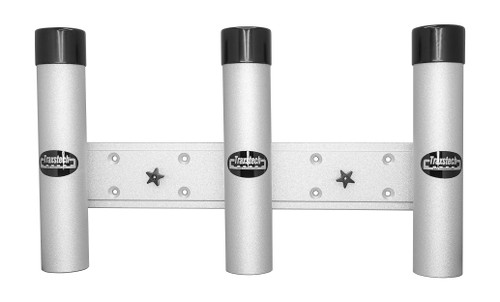
Use 4-foot of 2-inch PVC as your backbone. Install T-connectors every 12 inches along the top edge. Each T-connector receives a 1.5-inch reducer bushing, allowing individual rod holders to thread in place. This modular system lets you fish 1-4 rods depending on conditions.
Create Individual Rod Positions
Each rod mount consists of:
– 8-inch 1.5-inch PVC section
– 45-degree elbow with foam lining
– Threaded connection for angle adjustment
– Quick-release pin for height changes
The beauty lies in customization—set one rod low for bait fishing, another high for lure chunking, all from the same base unit.
Installation Mastery
Quick Installation Method
- Hold the holder vertically
- Push down using body weight
- Rock gently back and forth for deeper penetration
- Adjust to final angle (15-45 degrees)
- Test with rod before walking away
Pro tip: In loose sand, pour a bottle of water around the base. Saturated sand compacts immediately, doubling your holding power within minutes.
Rod Positioning Guidelines
- Surf fishing: 15-30 degrees for line clearance over waves
- Bottom fishing: 30-45 degrees for better bite detection
- Multiple rods: Vary angles 10-15 degrees to prevent tangles
- Reel position: Always keep reels above sand level to prevent grit damage
Troubleshooting Common Problems
Hard Sand Solutions
When sand feels like concrete, pre-drill using a 1-inch steel rod or old rebar. Create a pilot hole 12 inches deep, then install your holder normally. For extremely hard conditions, carry a small garden trowel to remove the top 6 inches of compacted sand.
Rod Security Fixes
Rod too small? Wrap the handle with electrical tape to increase diameter. Too large? Gradually flare the PVC opening using a heat gun and sandpaper mandrel. Prevent rotation by drilling a small hole through the holder and rod handle, inserting a stainless steel pin for surf fishing in heavy current.
Performance Optimization Secrets

Height Adjustability Systems
Telescoping sections using PVC slip joints let you adapt from 12-48 inches above sand. Pin-lock systems at 2-inch intervals handle everything from low-profile bait fishing to keeping lines above crashing waves. Add a 2-pound counterweight to tall configurations for extra stability.
Angle Adjustment Mechanisms
Wing nut adjustments provide infinite angle settings from 15-60 degrees. Preset positions at 15, 30, and 45 degrees cover 90% of surf conditions. Locking mechanisms prevent drift during extended sessions or overnight dead-stick fishing.
Cost Breakdown and Sourcing
Budget Options
- Basic PVC holder: $8-12 in materials
- Premium PVC multi-rod: $25-35
- Steel construction: $20-30
- Aluminum lightweight: $35-50
Local Material Sources
- PVC: Any home improvement store carries 10-foot standard lengths
- Metal: Local steel suppliers offer cuts and threading services
- Hardware: Marine supply stores stock stainless steel bolts and hardware
- Foam: Upholstery shops sell closed-cell foam by the yard
Storage and Transportation Solutions
Compact Designs for Hiking
Telescoping sections collapse to 18 inches total length. Detachable components store in a 4-inch diameter tube strapped to your beach cart. Modular systems with standardized connections let you carry a 4-rod setup in the space of a single traditional holder.
Protection During Transport
End caps prevent sand spike damage to rods, vehicles, and shins. Padded carrying cases protect delicate components while dedicated compartments separate metal and PVC pieces to prevent scratches. Drainage holes eliminate water accumulation during wet storage.
Your perfect beach rod holder awaits—whether you choose the $10 PVC route or the premium aluminum build, you’ll spend more time fishing and less time juggling gear. Start with a basic single-rod version this weekend; once you experience hands-free fishing, you’ll never hit the beach without multiple rod holders again.


