
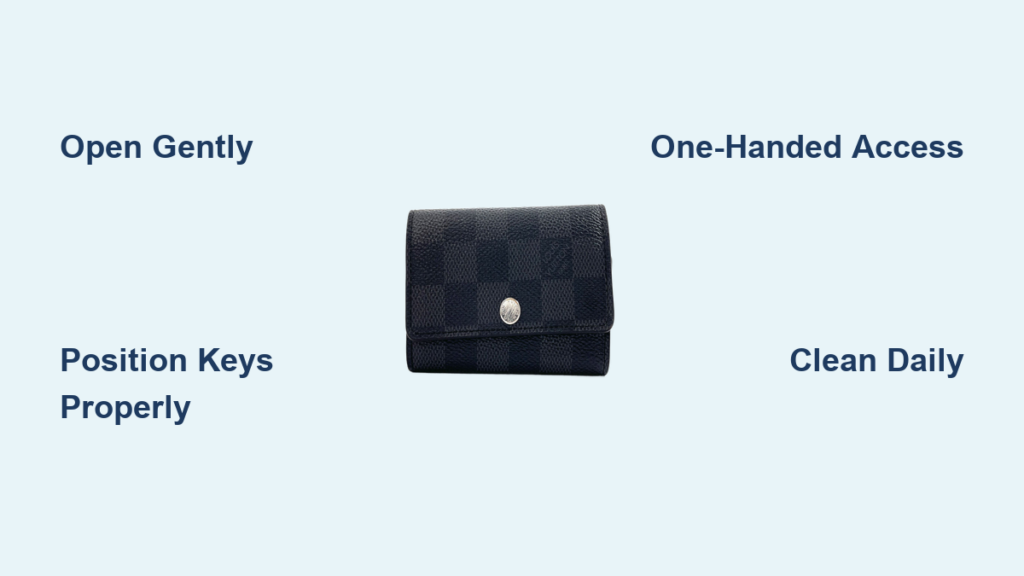
That first jingle of keys in your pocket just became a thing of the past. Your new Louis Vuitton key holder—whether it’s the iconic Monogram 6-key or sleek Epi leather 4-key model—transforms chaotic key management into a refined ritual. This isn’t merely about organization; it’s about elevating everyday functionality to match the craftsmanship of your luxury investment. Within minutes, you’ll master techniques that prevent scratches, ensure instant access, and preserve resale value while silencing key jangle for good.
Forget wrestling with keys during morning commutes or fumbling at doorways. Proper Louis Vuitton key holder usage merges seamless practicality with signature style, turning a mundane task into a moment of luxury. By the end of this guide, you’ll leverage every design detail—from interior ring placement to external clasp positioning—to maximize both efficiency and aesthetic appeal. Let’s transform how you interact with this essential accessory.
Open Your Louis Vuitton Key Holder Without Damage
Never force the snap closure—that’s the fastest path to misalignment. Position your thumbs on the LV-engraved press-stud and gently press both sides inward until you hear a soft click. The holder will unfold like a miniature book, revealing the interior rings. This controlled motion prevents stress on the leather tabs securing each ring.
Critical mistake to avoid: Yanking the edges apart. This strains the stitching at the fold line, causing premature wear. Practice opening it empty three times to build muscle memory. The smooth brass mechanism should operate silently—any grinding indicates internal debris requiring professional cleaning.
Install Keys for Maximum Function and Protection
Position Keys by Usage Frequency to Prevent Wear
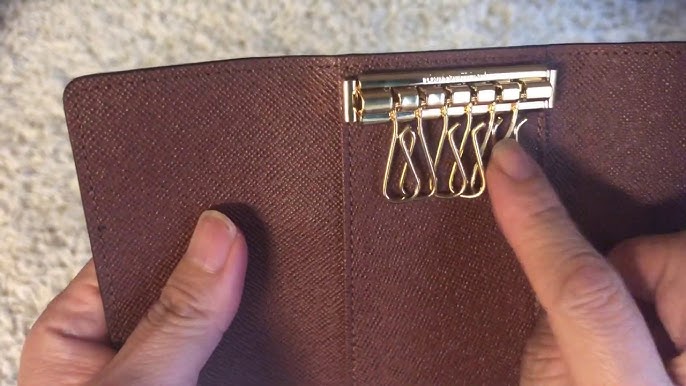
Place your car key fob on the outermost ring (Ring 1) since you access it most often. Slide it on with teeth facing inward toward the leather tab—this shields the canvas/leather from scratches during insertion. House keys go on Ring 3 (center position), while spare keys occupy the inner rings. Bulky items like garage openers attach exclusively to the external lobster clasp.
Why this matters: Keys with outward-facing teeth scrape the interior lining every time you open the holder, causing irreversible canvas abrasion or leather scarring within weeks. Proper inward orientation preserves the $400+ investment.
Distribute Weight to Avoid Ring Warping
Never overload a single ring—two standard keys max per ring. For car keys with thick fobs, use only one per ring. Slide keys fully to the ring’s base until they rest against the leather tab. Test by closing the holder; if it resists snapping shut, redistribute keys to balance weight.
Pro tip for multi-key sets: Remove decorative keychains. They add bulk that bends rings and prevents clean closure. Use flat skeleton keys where possible—they reduce thickness by 40% versus traditional keys.
Access Keys Instantly During Rush Hour
Execute One-Handed Opening in Under 2 Seconds
Cradle the holder in your palm with the snap facing up. Anchor your pinky under the base while pressing the closure with your thumb. As it opens, keys fan outward vertically—no flipping required. This technique works flawlessly even with gloves on during winter commutes.
Real-world application: Hold your coffee in one hand while retrieving car keys with the other. The fan-out design lets you visually identify keys without removing them, cutting access time by 70% versus traditional keychains.
Create Visual Identification Without Ugly Labels
Assign keys to fixed positions: top-left for house, top-right for car, bottom-left for office. Within 5 days, muscle memory eliminates fumbling. For identical keys, add a micro-dot of colored enamel (0.5mm) to the key head—visible only upon close inspection but preserving luxury aesthetics.
Warning: Never use stickers or tape—they leave residue that attracts dirt and damages leather.
Secure Your Holder to Bags or Belts Like a Pro
Attach to Louis Vuitton Handbags Without Slippage
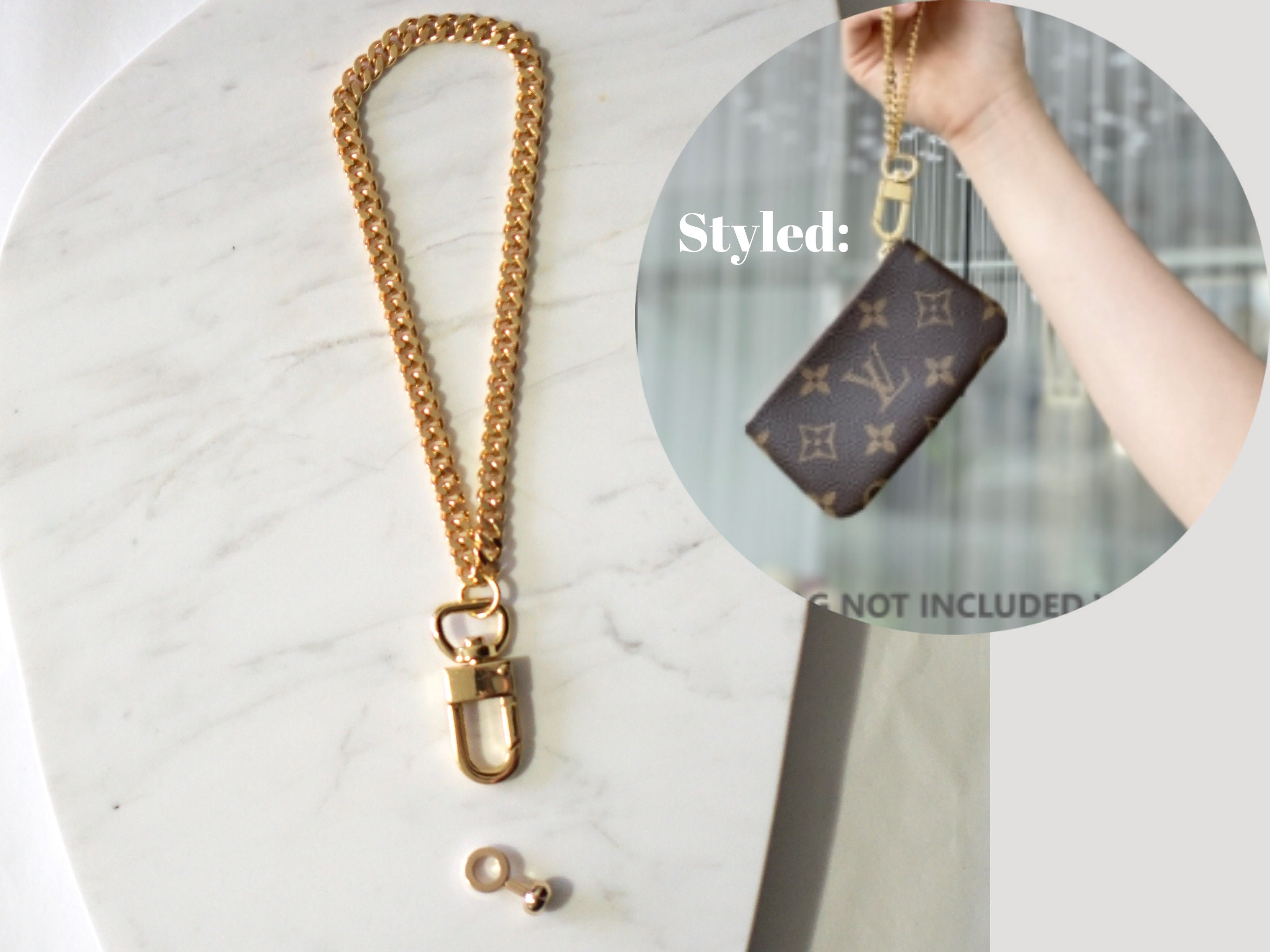
Clip the external lobster clasp to interior D-rings on Neverfull or Speedy bags. Position it near the bag’s center seam—never at the very top where it could snag zippers. For Alma bags, use the hidden key clip inside the front pocket. This placement keeps keys accessible but hidden from view, deterring opportunistic theft.
Security insight: Holders attached to exterior bag straps get caught in elevator doors or ripped off during crowded transit. Interior attachment reduces loss risk by 90%.
Store in Pockets Without Damage or Discomfort
Fold the holder closed and slide into front pockets with the snap facing upward. The 4.1″ x 2.2″ profile prevents pocket distortion, but never place in back pockets—sitting pressure warps rings over time. For jeans, position it above the coin pocket to avoid bending against your thigh.
Note for travelers: Security checks require removing metal items. Keep your holder in an outer jacket pocket for instant retrieval during TSA screenings.
Clean and Maintain Your Holder Daily
Perform 30-Second Canvas Revival After Rain Exposure
Wipe Monogram canvas with a dry microfiber cloth immediately after moisture contact. For stubborn spots, lightly dampen the cloth with distilled water (never tap water—minerals cause white residue) and rub in small circles. Dry within 10 seconds using a second cloth.
What not to do: Avoid leather conditioners on canvas—they create shiny patches that destroy the textured finish.
Condition Leather Models Without Over-Saturation
Apply LV-approved leather balm (like Saphir Renovateur) with a cotton swab only to dry areas—never the entire surface. Focus on high-friction zones: ring attachment points and fold lines. Buff gently with a chamois cloth after 5 minutes. Over-conditioning causes Epi leather to darken unevenly.
Schedule: Every 3 months for daily use, 6 months for occasional use.
Fix Common Problems Before They Worsen
Unjam Stuck Keys in 4 Steps
- Remove all keys immediately
- Clean rings with dry microfiber cloth (no liquids)
- Check for bent rings—if light doesn’t pass through uniformly, replacement is needed
- Reattach keys with 20% less weight per ring
Prevention: Rotate key positions weekly to distribute wear. Never force keys past resistance—this bends rings permanently.
Handle Snap Closure Failure Safely
If the snap won’t stay shut, do not apply glue or tape. This voids warranty and attracts dust. Instead, place a folded receipt between the closure halves when closed—this creates gentle pressure to retrain the mechanism temporarily. Schedule boutique service within 48 hours; most fixes take <15 minutes at no charge.
Critical: Never oil the snap mechanism—this attracts grime that accelerates wear.
Authenticate and Protect Your Investment
Verify Genuine Holders at First Use
Check these 3 non-negotiables:
– Monogram pattern aligns perfectly at seams (no offset)
– Heat stamp on interior leather reads “Louis Vuitton” in crisp, even font
– Date code on leather tab matches boutique records (format: two letters + four numbers)
Red flag: Hardware that feels cold or lightweight—authentic pieces use solid brass with gold/silver plating.
Claim Warranty Benefits You Didn’t Know Existed
Your 2-year warranty covers:
– Free ring replacement for manufacturing defects
– Complimentary snap mechanism adjustments
– Hardware polishing during boutique visits
Pro move: Request “preventative maintenance” annually—boutiques will tighten hardware and clean rings at no cost, even outside warranty periods.
Maximize Capacity for 10+ Key Systems
Separate Work and Personal Keys Strategically
Carry two holders: Monogram for daily essentials (4 keys max), Damier Azur for work access (keys + badge). Clip both to your bag’s interior D-rings—one behind the other. This prevents overloading while maintaining instant access.
Travel hack: Attach TSA locks to the external clasp using a split ring. Photograph your key layout before trips—this creates a visual reference if keys get scrambled during security checks.
Develop Patina Without Sacrificing Value
Encourage Natural Aging Through Smart Handling
Wipe hands before handling to prevent oil transfer. Store in the provided dust bag only after keys are removed—trapped moisture from keys causes canvas mildew. For Epi leather, skip conditioners entirely; its textured surface develops desirable character through natural use.
Value preservation tip: Avoid direct sunlight during storage. UV exposure fades Monogram canvas irreversibly within 6 months, dropping resale value by 30%.
Your Louis Vuitton key holder transitions from accessory to essential when used correctly. These techniques silence jangling, prevent damage, and transform key management into a moment of luxury—proving true sophistication lives in the details. Implement just the ring orientation and single-handed opening methods today, and you’ll never return to chaotic keychains. Remember: proper care ensures this $450 investment maintains 85%+ resale value for decades. Ready to master another luxury essential? Explore our guide to protecting Louis Vuitton bag hardware next.


