
Lost pacifiers are every parent’s nightmare—especially during that crucial moment when your baby needs comfort most. A soother holder, also known as a pacifier clip, transforms this daily frustration into peace of mind by keeping precious pacifiers securely attached and within reach. This simple yet essential baby accessory prevents costly replacements while ensuring your little one always has their comfort item when needed. If you’re wondering how to use soother holder correctly, this guide delivers the exact steps for safe, effective implementation.
Mastering the proper use of a soother holder involves more than just clipping it on. From selecting the right attachment method to understanding critical safety protocols, this guide will walk you through everything you need to know about using these devices effectively and safely. You’ll learn precise attachment techniques for different holder types, discover smart alternative uses beyond pacifiers, and most importantly, implement life-saving safety practices that protect your baby.
Select Your Soother Holder Type
Loop-Style Holders
Loop-style holders feature adjustable cords, leather strips, or canvas loops that thread through your pacifier’s handle. These versatile options accommodate various pacifier designs and offer secure attachment without permanent modification. They’re ideal if you frequently switch pacifier brands or prefer a customizable fit.
Key materials you’ll encounter:
– Durable leather loops for longevity through multiple children
– Soft canvas straps that won’t irritate delicate skin
– Decorative beaded cords that double as sensory toys for older infants
Snap-Style Holders
Snap-style holders use plastic or metal closures that fasten around pacifier handles. These offer quick attachment and removal, making them ideal for frequent pacifier changes throughout the day. They’re particularly useful for parents on the go who need one-handed operation during diaper changes or feedings.
Common closure systems:
– Traditional plastic snaps that provide audible confirmation when secure
– Metal snap closures for extra durability with heavy use
– Velcro alternatives that work with sensitive pacifier materials
Compatibility Check
Before purchasing, verify your holder matches your pacifier brand. Some specialty pacifiers require specific attachment methods, while universal designs fit most standard models. Critical tip: Always test the holder with your actual pacifier before relying on it—some narrow-handle designs need loop-style holders, while wider bases work better with snaps.
Attach Loop-Style Holders

Thread the Pacifier Handle
Start by compressing the loop end between your fingers to reduce its diameter. This allows easier threading through your pacifier’s handle or ring. Push the squeezed loop completely through the handle until the strap edge meets the pacifier. Visual cue: You should see equal lengths of strap emerging on both sides of the pacifier handle.
Secure the Connection
Bring the clip end around to meet the loop you just created. Insert the entire clip and strap through this loop, then pull firmly to tighten. The resulting knot should be secure yet adjustable for future removal. Pro tip: Leave a small gap (about 1/4 inch) when tightening to prevent accidental detachment during use.
Critical Safety Check
Never thread loops through pacifier ventilation holes. These holes provide emergency air access if swallowed—blocking them creates serious choking hazards. Always attach through the designated handle or ring only. Double-check: Hold the pacifier up to light to confirm all ventilation holes remain completely unobstructed after attachment.
Fasten Snap-Style Holders
Open and Prepare
Completely open the snap or Velcro closure. Check that the closure mechanism faces away from the pacifier nipple area to prevent irritation during use. Warning: If the snap faces inward, it could rub against your baby’s face or interfere with proper sucking.
Insert and Align
Thread the strap through your pacifier’s handle, ensuring smooth operation. Position the closure on the outer side of the handle for easy access and optimal comfort. Key detail: The strap should run parallel to the pacifier shield, not cross over the nipple area.
Secure Firmly
Press snap pieces together until you hear a clear click. For Velcro styles, ensure complete surface contact along the entire closure. Always verify secure attachment before giving to your baby by gently tugging on the strap. Test: Shake the pacifier vigorously—if the holder detaches, reattach more securely.
Clip to Clothing Safely

Select Safe Attachment Points
Choose clothing locations low on your baby’s body—think bottom of shirts or sleeve ends. These positions keep the pacifier accessible while eliminating strangulation risks associated with neck-area attachment. Never clip above the baby’s chest line to prevent the cord from resting near the neck.
Operate the Clip Mechanism
Squeeze clip handles or flip the plastic lever to open completely. Pinch your chosen fabric location between fingers, then insert fabric into the open clip while carefully avoiding skin contact. Critical step: Always check both sides of the fabric to ensure no skin or hair is trapped before releasing the clip.
Verify Secure Placement
Release clip handles to secure firmly. Double-check that no skin or hair is pinched in the mechanism. The clip should hold securely without damaging delicate baby clothing. Test method: Gently pull downward on the pacifier—properly attached holders won’t slip more than 1-2 inches before stopping.
Explore Alternative Uses
Stroller Attachment
Secure soother holders to stroller frames or handles when on walks. This keeps pacifiers accessible while preventing drops onto dirty surfaces. Pro tip: Clip the holder to the stroller’s safety strap attachment point for optimal stability during movement.
Diaper Bag Integration
Attach holders to diaper bag straps or rings for organized storage. This prevents digging through bags during urgent pacifier needs. Time-saver: Designate one holder exclusively for your diaper bag to always know where backups are stored.
Multi-Purpose Applications
Approved items for attachment:
– Sippy cups with handles (ensure cup weight doesn’t exceed holder capacity)
– Lightweight teething rings (under 2 ounces)
– Small toys with loops (no choking hazards)
– Snack containers with attachment points
Weight limitations: Never attach items heavier than your pacifier to baby’s clothing. Limit clothing attachments to pacifier weight only—secure heavier objects to strollers, bags, or parent’s clothing.
Master Safe Removal
Before Sleep Protocol
Remove soother holders completely when laying your baby down for naps or nighttime sleep. This eliminates strangulation risks during unsupervised periods. Non-negotiable rule: Pacifier clips belong only on awake, supervised babies.
Quick Release Techniques
For loop-style holders: Pull the knot to loosen, then slide the pacifier handle back through the opened loop. Practice this one-handed motion while holding your baby.
For snap-style holders: Simply pull apart the closure mechanism, then slide the strap free from the pacifier handle. Keep your thumb positioned on the release point for instant access.
Emergency Removal
Keep removal techniques practiced and ready. In any situation where the holder becomes entangled or poses risk, prioritize immediate removal over gentle handling. Critical action: If the cord wraps around any body part, cut it immediately with scissors—never try to unwind.
Maintain Your Holder
Cleaning Schedule
Clean your soother holder during every pacifier cleaning cycle or when visibly soiled. Use warm water and mild soap for thorough sanitization, then air dry completely before reuse. Never microwave or boil holders—this damages clips and weakens straps.
Replacement Indicators
Replace holders every 2-3 months or immediately if you notice:
– Visible wear or fraying at stress points
– Weakened clip tension that won’t grip fabric
– Cracked or damaged closures that don’t secure properly
– Discoloration beyond normal use indicating material breakdown
Post-Pacifier Repurposing
Once your child outgrows pacifiers, transform holders into key holders or small item clips for parents. These durable accessories often serve families for years beyond their original purpose—just ensure all baby-safe materials remain intact.
Follow Critical Safety Rules
Never Locations
Prohibited attachment points:
– Crib rails or interiors (strangulation hazard)
– Car seat interiors during use (accident risk multiplier)
– Any location within baby’s reach when unsupervised
Ventilation Protection
Always verify pacifier ventilation holes remain unobstructed. These features provide emergency air access and must never be blocked by improper attachment. Daily check: Hold pacifier to light before each use to confirm clear airflow paths.
Regular Safety Checks
Before each use, verify:
– Clip strength prevents child opening (test with baby’s fingers)
– No sharp edges or damaged parts
– Proper attachment through handles only
– No pinched skin or hair in clip mechanism
Quick Reference Guide
Loop-Style Attachment:
1. Squeeze loop, thread through handle
2. Bring clip end through loop
3. Pull to tighten, verify security
Snap-Style Attachment:
1. Open closure completely
2. Thread through pacifier handle
3. Align and press firmly to secure
Safety First Reminders:
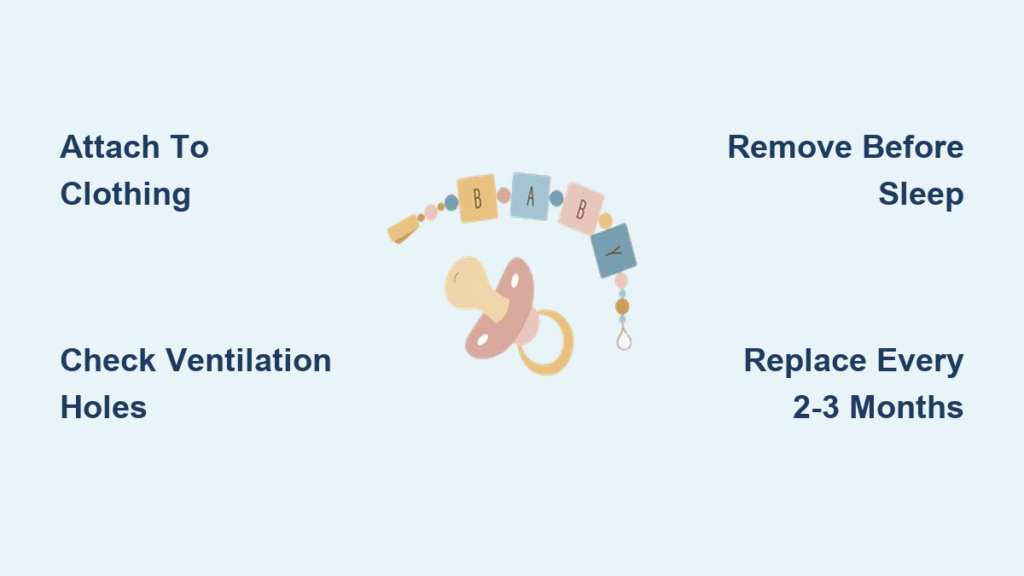
– Remove before sleep
– Keep clips low on clothing
– Check ventilation holes
– Replace every 2-3 months
Mastering how to use soother holder transforms daily parenting challenges into manageable routines. With proper attachment techniques and safety awareness, you’ll prevent lost pacifiers while keeping your baby comfortable and secure. Implement these practices consistently, and you’ll gain peace of mind knowing your little one’s comfort item is always safely within reach—without compromising their wellbeing. Remember: the few seconds spent verifying proper attachment today prevent emergencies tomorrow.


