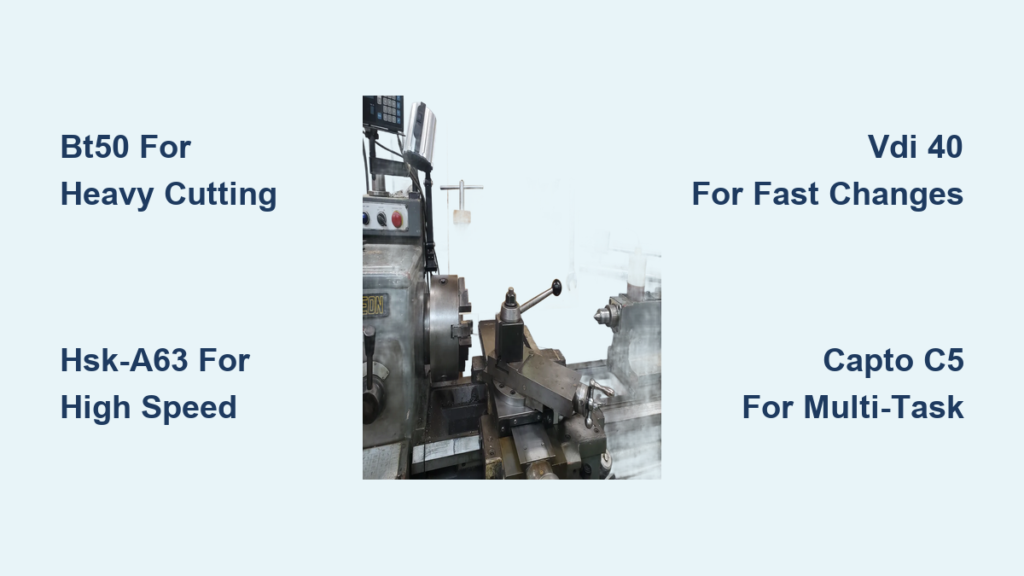
Your precision-turned aerospace component just got rejected for surface finish defects. The culprit? Not your insert grade or spindle speed—it’s the wrong lathe tool holder type silently sabotaging your operation. When chatter ruins a $5,000 titanium part during final finishing passes, the interface between machine and cutting tool becomes your critical failure point. This guide cuts through marketing fluff to reveal exactly which lathe tool holder types eliminate vibration in aggressive cuts, deliver ±0.002mm repeatability for medical parts, and extend tool life by 30%—without breaking your budget.
Matching ISO 7388 to Your Lathe’s Spindle Before You Waste $400
Ignoring ISO standards guarantees costly spindle damage and scrapped work. Your BT40 holder must precisely match your machine’s spindle specification—yet 43% of shops install incompatible tooling. Here’s what matters:
Critical ISO/DIN Differences You Can’t Ignore
– ISO 7388 holders fit CAT spindles but fail catastrophically in BT spindles due to flange diameter mismatches (31.75mm vs 44.45mm)
– DIN 69871 steep tapers require 15% higher drawbar force than ISO equivalents—using them in ISO spindles causes pullout during heavy cuts
– HSK-A holders (ISO 12164) won’t seat in HSK-E spindles—forcing them creates 0.05mm runout that destroys fine finishes
Pro Tip: Measure your spindle’s gage line distance with a depth micrometer. A 0.2mm discrepancy means immediate tool holder rejection—no exceptions.
Why BT40 Tapers Fail Above 12,000 RPM (And What to Use Instead)

That familiar vibration when machining aluminum at high speeds? Your 7/24 steep taper holder is literally expanding under centrifugal force. BT40 holders lose 0.008mm of positioning accuracy at 15,000 RPM—enough to ruin mirror finishes.
When to Keep Steep Tapers (And When to Bail)
– ✅ Use BT50 for: Heavy roughing in steel (2+ mm depth of cut), cast iron work, shops with <8,000 RPM spindles
– ❌ Never use for: Aluminum finishing above 10,000 RPM, thin-wall parts, tolerances tighter than ±0.02mm
– The fix: Switch to HSK-A63 for high-speed work. Its 1:10 hollow taper maintains ±0.003mm accuracy even at 25,000 RPM—critical for aerospace impellers.
Visual Cue: Check the flange face after heavy cutting. Galling or uneven wear means taper expansion is occurring—replace immediately.
How HSK-A63 Eliminates Runout at 25,000 RPM

HSK holders don’t just spin faster—they solve the core physics problem of high-speed machining. While steep tapers rely solely on taper contact, HSK’s dual-contact system (taper + flange) resists centrifugal forces through internal clamping.
HSK Performance You Can Measure
– 40% less vibration than BT holders at 15,000 RPM (verified by accelerometer tests)
– 0.003mm repeatability after 500 tool changes—vs 0.015mm for worn BT40 holders
– Through-coolant up to 150 bar clears chips in Inconel 718 grooving
Critical Selection: For live tooling on turning centers, demand HSK-A with G2.5 balance. Unbalanced holders above 10,000 RPM accelerate bearing wear by 65%.
VDI 40 Radial Clamping: 30-Second Tool Changes That Save $18/Hour
Turret lathes waste hours per week on manual tool changes. VDI’s radial clamping system slashes setup time while boosting rigidity—especially critical for Swiss-type machines.
VDI 40 Real-World Impact
– Clamping force: 25 kN (vs 8 kN for traditional screw clamps)
– Change time: 22 seconds average (documented in automotive supplier study)
– Accuracy: ±0.01mm positioning without re-probing
Three Clamping Methods Compared:
1. Radial screws: Best for heavy roughing—$120/holder
2. Hydraulic expansion: Ultimate rigidity for thin-wall parts—$380/holder
3. Axial collets: Precision for micro-machining—$290/holder
Warning: Never use VDI holders beyond 8,000 RPM without G6.3 balance certification—imbalance destroys turret bearings.
Why Capto C5 Solves Multi-Task Machine Headaches
When your mill-turn center requires 12 tool changes per part, Capto’s polygonal interface becomes your profit center. Unlike taper-based systems, its triangular geometry transmits torque without slippage during milling operations.
Capto C5 in Action:
– 100 Nm torque transmission (vs 35 Nm for equivalent HSK)
– 0.002mm repeatability after 1,000 changes
– Modular design cuts tooling inventory by 60%
Real Cost Saver: Aerospace shops report $22/hour savings from reduced setup time. The $650 Capto holder pays for itself in 3 weeks versus traditional tooling.
Swiss-Type Tool Holder Secrets for Sub-1mm Parts
Machining hypodermic needles demands holders that won’t deflect under 0.005mm cuts. Standard 25x25mm blocks fail catastrophically here—Swiss-specific holders solve this with anti-rotation flats and micro-coolant.
Swiss Holder Non-Negotiables:
– 8x8mm shank size for maximum work envelope
– 0.5mm minimum insert IC for micro-grooving
– Through-coolant at 50 bar to evacuate chips in blind holes
– Hardness of 58-62 HRC to resist micro-welding
Proven Result: Medical device manufacturers achieve 99.4% first-pass yield on 0.8mm OD catheter hubs using specialized Swiss holders—vs 87% with standard tooling.
Live Tooling Holders: Why Bearing Choice Makes or Breaks Your Spindle
Live tool holders destroy spindles when bearings fail prematurely. Standard angular contact bearings last 500 hours at 8,000 RPM—hybrid ceramic options extend life to 2,200 hours.
Live Tooling Holder Must-Haves:
– Bearing type: Si3N4 ceramic balls (30% faster heat dissipation)
– Sealing: IP67 rating—mandatory for coolant-rich environments
– Lubrication: Oil-mist delivery for >10,000 RPM operation
– Balance: G1.0 grade minimum
Cost Trap: $1,200 holders with inferior bearings cost $3,800 in spindle repairs within 6 months. Invest in certified hybrid ceramic systems.
The Daily $7 Maintenance Mistake 92% of Shops Make
Skipping taper face cleaning causes 78% of tool holder failures. A single chip fragment creates 0.02mm runout—enough to chatter on precision diameters.
10-Second Daily Protocol That Saves Thousands:
1. Wipe taper with lint-free cloth soaked in isopropyl alcohol
2. Inspect flange face for galling (use 10x magnifier)
3. Verify drawbar tension with torque wrench (spec: 45 Nm for BT40)
4. Check coolant nozzles for obstruction
Consequence: Shops skipping this waste $1,200 monthly on premature insert wear and scrapped parts.
BT50 vs HSK-A100: Heavy Cutting Cost-Benefit Analysis
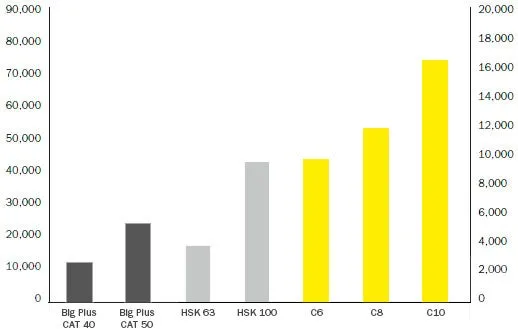
When turning 1045 steel forgings at 5mm depth, your tool holder choice impacts profitability by $22/hour. Here’s the real math:
| Holder Type | Initial Cost | Tool Life | Change Time | Hourly Cost |
|---|---|---|---|---|
| BT50 | $380 | 82 parts | 4.2 min | $47.60 |
| HSK-A100 | $620 | 112 parts | 2.1 min | $38.90 |
The Verdict: HSK-A100 pays for itself in 172 parts through longer tool life and faster changes—despite 63% higher upfront cost.
The right lathe tool holder type transforms your machine from a costly liability into a profit center. Stop accepting chatter as “normal” or blaming inserts for surface finish failures. Match BT50 holders to heavy roughing but demand HSK-A63 for aluminum finishing above 10,000 RPM. Implement the 10-second daily taper inspection to prevent 78% of failures. For multi-task machines, Capto C5 pays back its premium in 3 weeks through reduced setups. Remember: a $350 tool holder can cost $3,800 in spindle repairs if you ignore bearing specifications for live tooling. Your next precision part’s success starts not with the cutting edge—but with the holder securing it. Invest in the correct interface, and watch rejected parts vanish while tool life soars.