

Your chef’s knife clatters onto the granite countertop for the third time this week, its razor edge nicking against ceramic tile. This daily hazard isn’t just annoying—it’s silently destroying your most valuable kitchen tool. Learning how to make a knife holder solves this problem permanently while transforming your workspace into a professional-grade station. Whether you’re crafting a simple wooden block for your paring knives or engineering a magnetic strip for heavy cleavers, this guide delivers exact measurements, material secrets, and pro techniques used by culinary specialists. You’ll build a custom storage solution that protects blade edges, maximizes counter space, and reflects your personal style—all without expensive store-bought units.
Plan Your Knife Holder Design
Calculate Knife Capacity Needs
Measure every knife from tip to handle before cutting wood. A standard home collection of 5-8 knives needs 8-12 inches of horizontal space with 4-6 inches depth. For an 8-inch chef’s knife (the most common blade), add 1/4 inch clearance on all sides—this prevents blade contact during insertion. Space slots 3/8 inch apart for thin Japanese blades but widen to 3/4 inch for thick German chef’s knives. Always account for future additions; adding two empty slots now avoids rebuilding later. Sketch your layout on paper first—this prevents costly mistakes when working with expensive hardwoods.
Choose Safe Materials
Maple, walnut, and cherry aren’t just beautiful—they naturally resist bacteria growth for 10-15 years with proper care. Avoid pine despite its affordability; its soft fibers trap moisture and harbor germs. For modern builds, bamboo composite offers eco-friendly durability with uniform grain patterns that won’t splinter knife edges. Crucially, never use pressure-treated lumber or standard polyurethane finishes—these contain toxins that transfer to food. All materials must carry FDA approval for kitchen contact. Test wood hardness by pressing your thumbnail into the surface; if it leaves a mark, the material is too soft for long-term blade protection.
Build Traditional Wooden Block

Cut Precision Knife Slots
After sanding your hardwood block to final dimensions (typically 12″x4″x3″), mark slot positions using a carpenter’s square. For angled slots—essential for easy retrieval—set your table saw blade to 15 degrees and build a simple jig from scrap wood to hold your block at this angle during cutting. Start with shallow passes, removing only 1/16 inch per cut to prevent tear-out. Stop cutting when slots reach 75% of the block’s depth; this leaves structural integrity while allowing blade tips to rest safely above the base. Test-fit each knife immediately after cutting—slots should require gentle pressure to insert blades but not force.
Refine and Finish for Blade Protection
Smooth rough slot edges with 220-grit sandpaper wrapped around a dowel rod. Pay special attention to the entry point where blades first contact wood; any splinters here will scratch edges. Apply food-grade mineral oil liberally, working it into all surfaces with a lint-free cloth. Let it absorb for 24 hours before buffing—a tacky surface means insufficient drying time. For water resistance in humid kitchens, melt equal parts beeswax and mineral oil, applying the warm mixture with a soft brush. This creates a moisture barrier without clogging wood pores like varnishes do.
Create Magnetic Strip Holder
Install Flush Magnets for Maximum Hold
N52-grade neodymium magnets (1/2″ diameter x 1/8″ thick) provide the strongest grip for kitchen knives. Drill 1/8-inch deep holes using a Forstner bit—this creates clean, flat-bottomed cavities. Epoxy magnets with north poles facing outward, then place a steel backing plate behind the wood for 30% stronger hold. Critical safety step: After installation, run your fingernail across the surface; if you feel any protrusion, sand flush immediately. Even 1/32-inch ridges will dull knives during daily use. Test with your heaviest cleaver by mounting the strip temporarily and giving it sharp jolts—no knife should budge.
Mount at Optimal Height and Angle
Position magnetic strips 18 inches above countertops—this keeps blades accessible but away from children’s reach. Always mount into wall studs using 3-inch screws; toggle bolts in drywall will fail under knife weight. For angled mounting (recommended for easier blade removal), set the strip at 10 degrees using a digital level. This subtle tilt creates gravity-assisted extraction while preventing accidental drops. In rental kitchens, use heavy-duty Command strips rated for 16+ pounds—but test with 200% knife weight for 48 hours before trusting sharp blades.
Solve Common Construction Problems

Fix Loose Slot Fits Immediately
If a knife wobbles in its slot, don’t sand deeper—that weakens the block. Instead, cut 1/32-inch thick shims from matching hardwood scraps. Apply wood glue to the shim, slide it into the slot’s back wall, and clamp overnight. For oversized slots, wrap the knife handle in masking tape and insert it into the slot while the glue dries—this creates a custom fit. Always test with the actual knife before final assembly; blade width varies significantly even within the same set.
Prevent Magnetic Knife Drops
Stainless steel knives often slip on weak magnets. Solve this by embedding a second row of magnets 1/2 inch behind the first row—this doubles contact points without visible changes. For carbon steel blades, wipe magnets with acetone before installation to remove oils that reduce grip. If knives still slide, install rare earth magnets in a zigzag pattern rather than straight lines; this creates alternating polarity for stronger adhesion.
Budget Smart Material Choices
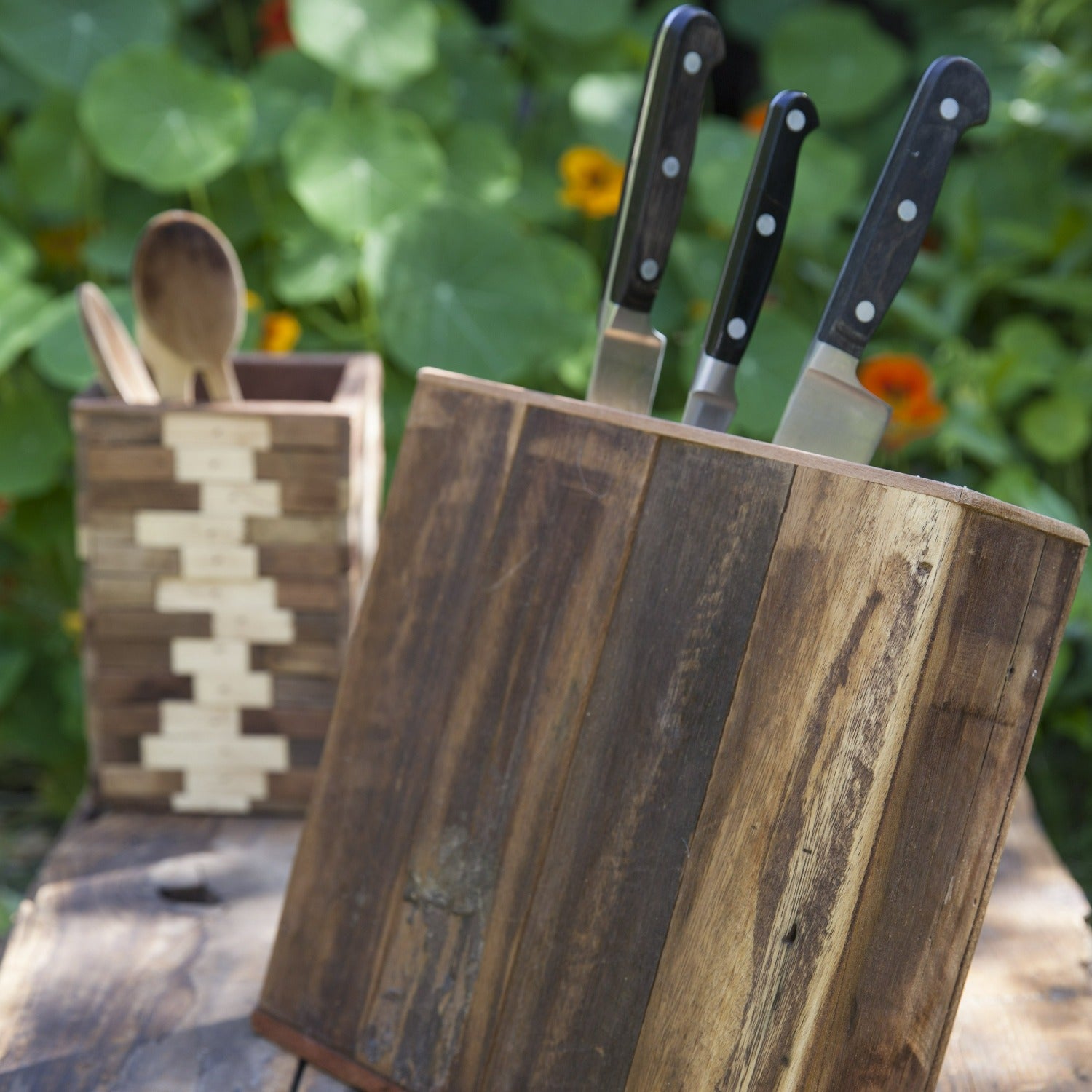
Cost-Effective Wood Sourcing Strategy
Skip expensive lumberyards for your first project. Visit local woodworking clubs or Facebook Marketplace for “offcut” hardwood bundles—12″x4″x3″ maple scraps often sell for $5. For magnetic strips, repurpose old speaker magnets (test strength first with a kitchen knife). Budget $15 total for a functional block: $10 for wood, $3 for mineral oil, $2 for sandpaper. Upgrade materials only after mastering basic construction; your third holder will justify walnut or cherry investments.
Personalize Your Final Design
Add Functional Custom Details
Carve 1/2-inch finger grooves along the front edge—this lets you lift knives without touching blades. For apartment kitchens, build a wall-mounted rack with 48-inch clearance and laser-engrave “SHARP” warnings. Professional cooks should integrate a 20-degree ceramic sharpening rod into the holder’s side; store it in a dedicated slot when not in use. Most importantly, match the holder’s footprint to your counter space: a 6″x8″ block fits tight city kitchens while 12″x18″ accommodates chef collections.
Your DIY knife holder becomes the unsung hero of your kitchen—protecting expensive blades while streamlining meal prep. Start with a simple wooden block using scrap materials to master slot spacing and finishing. Within two hours, you’ll have a functional holder that outperforms $50 store models. As your skills grow, tackle magnetic strips or modular systems that adapt to evolving collections. Remember: the best knife storage disappears into your workflow until you need it, then performs flawlessly every time. Maintain your creation with quarterly mineral oil treatments, and it will safeguard your knives for decades. Now grab that scrap maple board and begin—your sharpest cooking experience starts today.


