
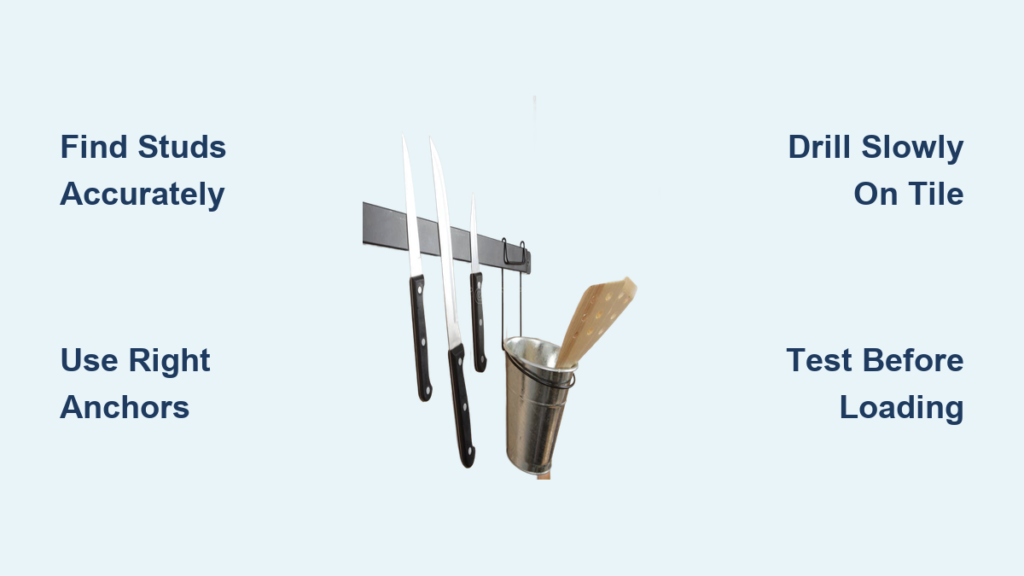
Tired of rummaging through cluttered drawers only to nick your expensive chef’s knife? Installing a magnetic knife holder solves this frustration while protecting your blades from edge damage. But mounting it wrong risks cracked tiles, wobbly hardware, and worst of all—knives crashing onto your countertop. This guide delivers the exact steps to secure your magnetic strip safely on any wall surface, whether you’re drilling into drywall studs or delicate tile backsplashes. You’ll learn where to position it for ergonomic access, which anchors prevent future disasters, and how to test stability before hanging a single blade.
Pick Your Wall Location Like a Professional
Avoid mounting above the stove where heat warps magnetic strips or near the dishwasher where vibrations loosen screws. Stand at your primary prep area and extend your arm—this natural reach zone 18-24 inches above your countertop keeps knives accessible yet safely out of children’s grasp. For households with kids, mount at 22+ inches or choose inside cabinet doors. Knock along your chosen spot: hollow sounds mean drywall, solid thuds indicate tile or masonry. Critical warning: Scan for hidden electrical wires or pipes using a stud finder’s AC detection mode before drilling—striking these causes dangerous shorts or floods.
Assemble Wall-Specific Tools and Hardware
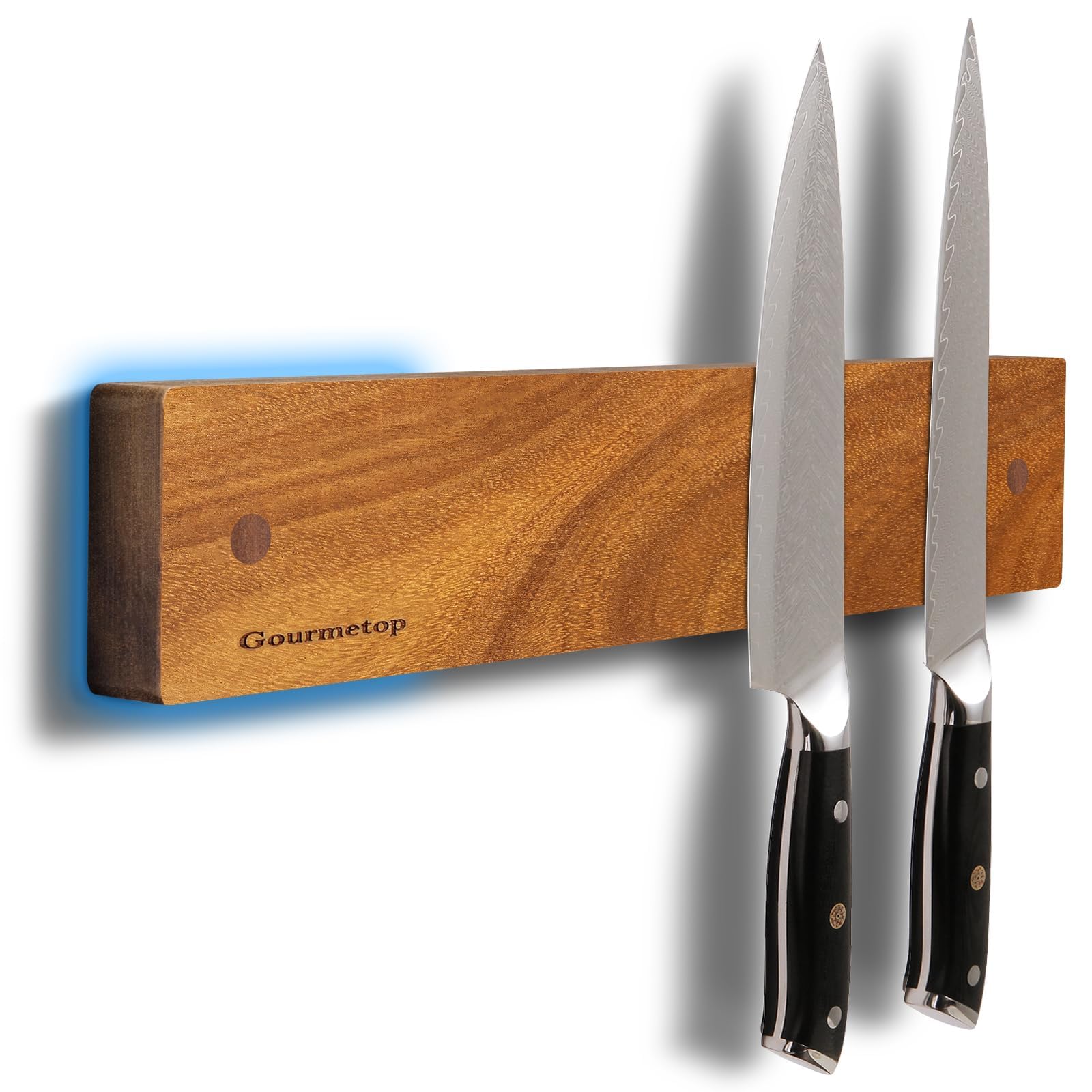
Your wall type dictates every tool choice. Drywall into studs needs only 1/8-inch pilot bits and 2½-inch wood screws, but tile requires carbide-tipped bits and plastic anchors to prevent shattering. Skip mismatched hardware that guarantees failure—most magnetic holders include basic screws, but these rarely handle heavy knife collections. Upgrade to:
Essential toolkit by wall type:
– Drywall with studs: Stud finder, 2-foot level, 1/8″ drill bit, 2½” wood screws
– Drywall without studs: Toggle bolts rated 50+ pounds (holds cleavers safely)
– Tile backsplash: Painter’s tape, carbide glass/tile bit, plastic anchors
– Brick/concrete: Masonry bit, hammer drill, lead anchors
Grab safety glasses and a dust mask—drilling creates eye-hazard debris, especially in tile or masonry. Never skip the level; even a 2-degree tilt makes knives slide off.
Find Studs with Zero Guesswork
Electronic stud finders beat magnetic versions for accuracy. Run the device horizontally at your target height until it beeps consistently—most studs sit 16 inches apart in modern homes. Mark both edges of the stud, then find the center point. Pro technique: Drive a 1-inch finish nail through drywall at the center mark. If wood resists, you’ve hit the stud; if it slides through, shift ¾ inch left or right and retest. No stud access? Toggle bolts become your lifeline—they expand behind drywall for 50+ pound holding power. Avoid cheap plastic anchors; they loosen under constant knife weight within months.
Drill Flawless Holes Without Cracking Tile
Hold your magnetic strip against the wall and use a level to mark screw points. For tile installations, cross two strips of painter’s tape over each mark to prevent bit slippage. Drill at 300 RPM with light, steady pressure—never use hammer action. Pause every 10 seconds to let the bit cool; overheating cracks tile instantly. Masonry requires a hammer drill on low speed with holes ¼” deeper than your anchor length. Drywall into studs needs only 1/8″ pilot holes. Critical mistake to avoid: Rushing drill speed. Let the bit work naturally—forcing it creates oversized holes that weaken anchor grip on brick or tile.
Secure the Holder Without Stripping Screws

Start all screws by hand to prevent cross-threading. For stud mounting, drive screws until snug but stop before the magnetic strip cracks—over-tightening is the #1 cause of mounting failure. With toggle bolts in drywall:
- Fold toggles and insert through holder and wall
- Tighten until the holder sits flush against the wall
- Stop when resistance suddenly increases (indicates full expansion)
Test stability by pulling downward with increasing force. If it wobbles, remove the holder and upgrade to heavy-duty toggle bolts. Red flag: Screws spinning without tightening means your anchor is stripped—drill a new hole at least 2 inches away.
Load Test Before Hanging Expensive Knives
Never trust your $200 chef’s knife to an untested mount. Start with one paring knife and check if it stays put when you tug downward. Gradually add heavier blades like cleavers (1-3 lbs), verifying each holds securely. A properly installed strip supports 2-5 pounds per linear foot. Immediate action required if you see:
– Knives sliding under their own weight
– Holder flexing away from the wall
– Screws loosening after 24 hours
Weak installations usually fix with toggle bolts or relocating to a stud. If knives won’t stick, rare earth magnet strips solve interference from stainless steel backsplashes.
Prevent Wall Damage with Monthly Maintenance
Vibrations from nearby appliances gradually loosen hardware—skip this step and your holder fails catastrophically. Weekly, tighten all screws with a screwdriver (don’t overtighten). Monthly, test magnetic strength by hanging your heaviest knife and shaking it gently. Clean the strip weekly with a damp cloth; monthly, use mild soap on knife contact areas to prevent grease buildup that weakens adhesion. Critical safety check: Watch for hairline cracks spreading from mounting points—these mean the wall can’t handle the weight. Relocate immediately if spotted.
Fix Tile Cracks and Sliding Knives Fast
Tile cracked during drilling? Fill gaps with matching grout, then redrill using a new carbide bit at 300 RPM with painter’s tape protection. Knives sliding off? Upgrade to rare earth magnet strips or redistribute weight—heaviest knives at the ends, lightest in the center. Holder pulling away? Replace plastic anchors with toggle bolts rated for 50+ pounds. For uneven mounts, remove the holder, fill old holes with spackle, and use a cardboard template for perfect realignment. Never mount within 4 inches of corners—use 12-18 inch strips angled at 15 degrees for safe corner access.
Install on Cabinets or Tile Without Drilling
Renters or tile-backsplash owners have smart alternatives. Under-cabinet mounting works with ¾” screws max—pre-drill pilot holes to avoid splitting wood. For adhesive mounting, clean both surfaces with alcohol, apply construction adhesive in a zigzag pattern, press firmly for 60 seconds, and wait 48 hours before loading. Maximum capacity: 3-4 lightweight knives. Rail systems offer flexibility—install the rail first, then attach magnetic holders with compatible brackets. Adhesive fails on textured walls or humid environments; always verify surface smoothness first.
Verify Installation with 3 Safety Tests
Your mount passes when:
– Level reads perfectly horizontal from all angles
– Cleaver stays put during firm downward tugs
– Zero interference with cabinet doors or appliances
– Knives hang securely with handles 1 inch apart
Take photos of the loaded holder now—future comparison spots subtle shifts. Final pro tip: Load knives heaviest at the ends, lightest toward the center. This distributes stress evenly across mounting points, preventing the strip from pulling away over time. Quality magnetic strips last decades, but hardware may need upgrading as your knife collection grows heavier. If in doubt about stone tile or plaster walls, hire a pro—$75-150 ensures your knives stay safely mounted.


