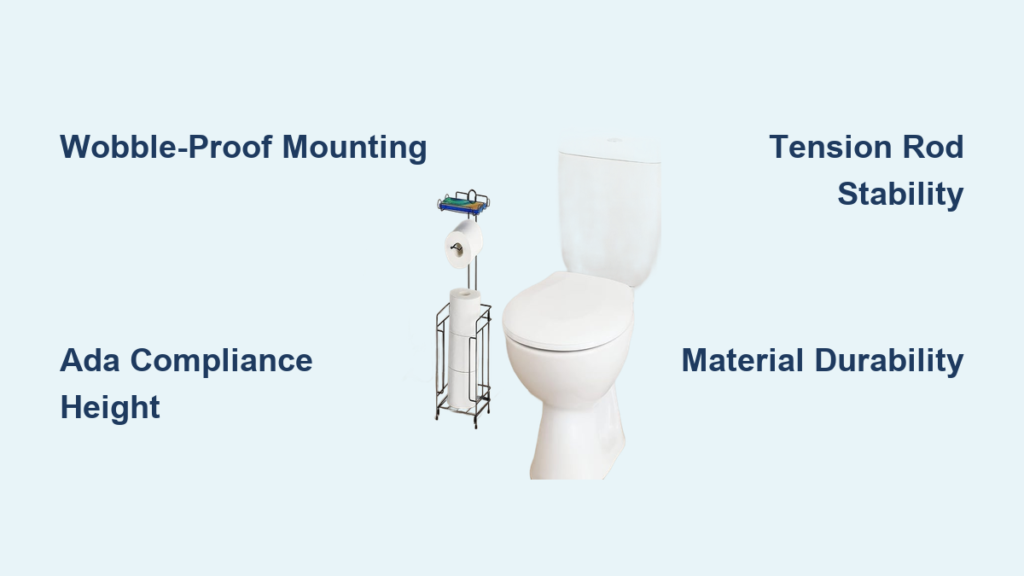
Running out of toilet paper mid-use ranks among the most universally frustrating bathroom experiences. A well-chosen spare toilet paper holder transforms this vulnerability into seamless convenience while elevating your bathroom’s functionality. Whether you’re battling limited square footage or seeking stylish storage that complements your decor, the right solution keeps fresh rolls accessible without cluttering countertops. This guide delivers actionable spare toilet paper holder ideas proven to solve storage dilemmas across 15+ bathroom layouts—from tiny powder rooms to master suites.
Stop settling for rolls stacked awkwardly on the floor or hidden in distant closets. Discover how strategic placement converts dead zones into efficient storage hubs while maintaining aesthetic harmony. You’ll learn to match holders to your specific spatial constraints, material preferences, and style personality—ensuring you never face an empty dispenser again.
Wall-Mounted Vertical Storage Systems

Space-Saving Tower Racks
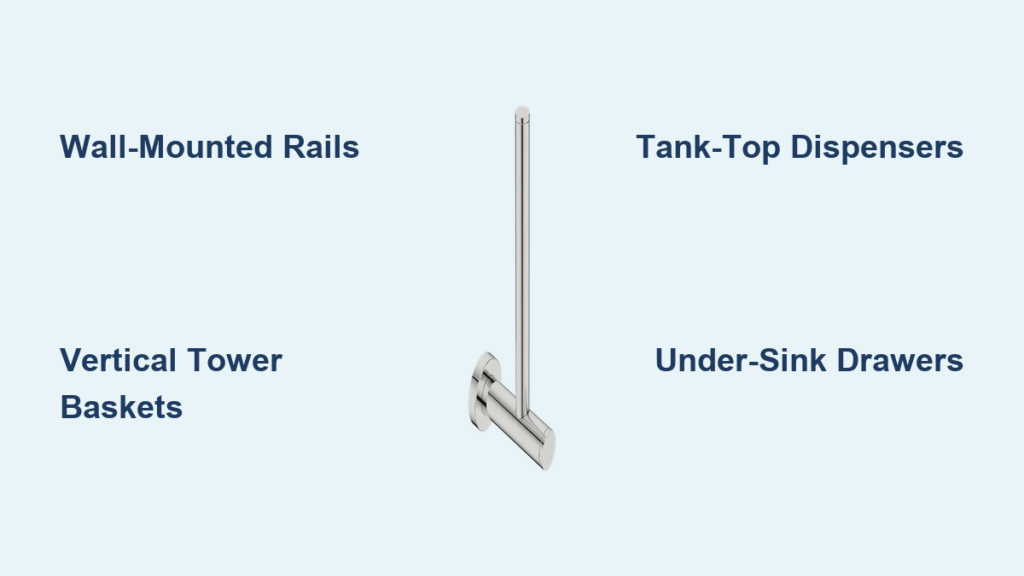
Maximize vertical real estate with wall-mounted rails that hold 2-4 spare rolls without floor footprint. Install brushed nickel or matte black rails 18-30 inches high using dual screws into wall studs—critical for supporting 10-15 lbs of distributed weight. These slim profiles (just 3-4 inches from the wall) thread rolls horizontally for instant access. For added utility, select models with integrated phone shelves or magazine racks to eliminate countertop clutter in compact bathrooms. Always measure your wall space against standard roll dimensions (4.0-4.5 inch width) before purchasing to avoid compatibility issues with jumbo rolls.
Multi-Bar Horizontal Solutions
Thread 4-6 spare rolls onto parallel bars spaced 4-6 inches apart for high-capacity storage in narrow spaces. These systems require heavy-duty toggle bolts in plaster or drywall (50-75 lb rating) due to weight concentration at mounting points. Position the bottom bar 26-30 inches from the floor for standard accessibility, or lower to 20-22 inches in family bathrooms. Avoid curved bar designs if storing mega rolls (5.5-6.5 inch diameter)—straight bars accommodate oversized cores more reliably. Pro tip: Wipe metal bars weekly with a microfiber cloth to prevent soap scum buildup that impedes roll rotation.
Freestanding Basket and Tower Designs
Woven Storage Bins
Water hyacinth or seagrass baskets add organic texture while holding 3-12 rolls depending on size—small (6″x6″x12″) for 3-4 rolls, medium (8″x8″x15″) for 6-8, large (10″x10″x18″) for 10-12. Choose models with removable plastic liners for effortless cleaning when spills occur. Place these near the toilet’s side wall where feet won’t kick them, ensuring rubber-bottomed stability on tile. For humid climates, skip natural fibers and opt for plastic rattan baskets that resist mold. Never overload beyond capacity—excess weight warps woven structures and causes rolls to jam.
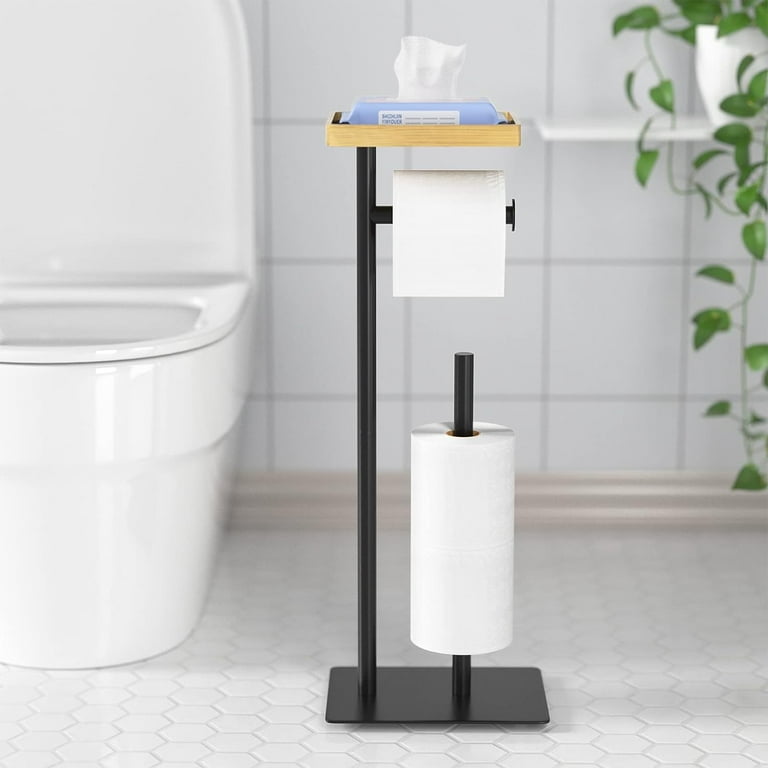
Slim Profile Pedestals
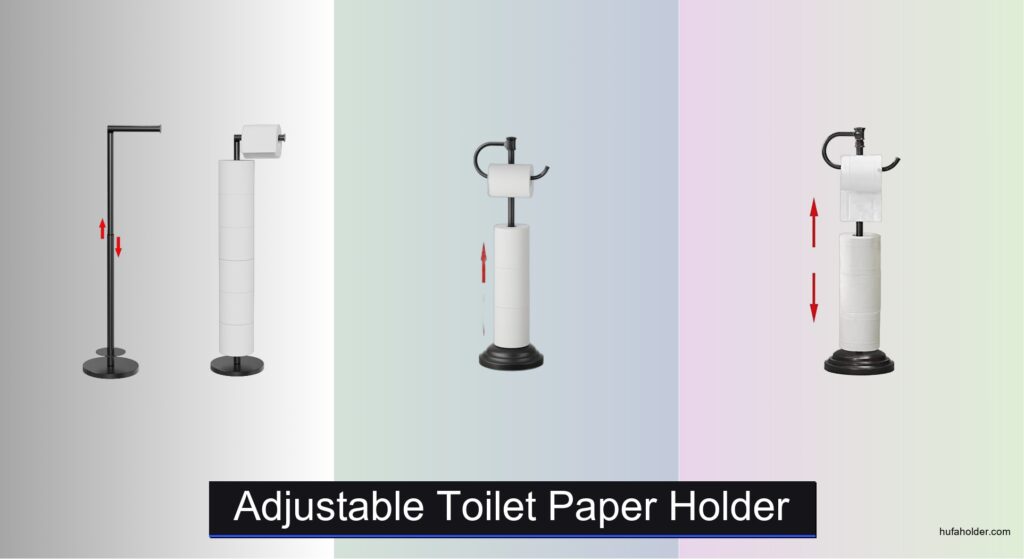
Bamboo or stainless steel towers (6″ diameter x 30″ height max) store rolls vertically through top-loading slots while occupying minimal floor space. Their discreet dispensing mechanism keeps rolls hidden until needed—a sleek solution for modern bathrooms. Verify the base has 4-6 lbs of weight (or felt pads) to prevent tipping when pulling rolls. Avoid placing these near shower steam vents; moisture warps wood composites faster than marine-grade stainless steel. For ADA compliance, position within 15 inches of the toilet seat’s side.
Behind-Toilet and Vanity Storage Hacks
Tank-Top Dispensers
Capitalize on wasted space with non-slip dispensers sitting directly on your tank lid (6″x12″x4″ footprint). These hold 2-3 spare rolls plus your active one but must stay under 5 lbs to prevent lid cracks. Measure tank width first—adjustable clamp models fit 5-8 inch tanks but may interfere with flush levers on older toilets. Opt for bamboo or plastic over metal to avoid condensation damage. Never stack dispensers; the combined weight risks shattering porcelain.
Under-Sink Pull-Out Drawers
Retrofit existing vanities with soft-close drawers (12-18″ wide x 4-6″ deep) storing 6-8 rolls horizontally. Ventilated bottoms prevent moisture damage in humid environments—critical for longevity. Install full-extension slides rated 75+ lbs to avoid drawer sagging. Measure vanity depth before buying; standard units require 4-6 inches of dead space between cabinet and wall. Pull-out side storage is ideal for deep vanities but avoid if plumbing obstructs the narrow 4-6 inch width.
Over-Toilet and Creative DIY Solutions
Fixed Étagère Units
Install standard over-toilet shelves (24-26″W x 9-11″D x 68-72″H) for multi-functional storage. Use the lower open shelf exclusively for toilet paper—keeping rolls visible but contained—while upper shelves hold towels. Anchor securely to wall studs; unsecured units risk tipping onto toilets. For small bathrooms, choose space-saver cabinets with dedicated 6-inch vertical compartments and sliding barn doors. Assembly takes 30-45 minutes but prevents rolls from drying out in enclosed melamine interiors.
Mason Jar and Pipe Conversions
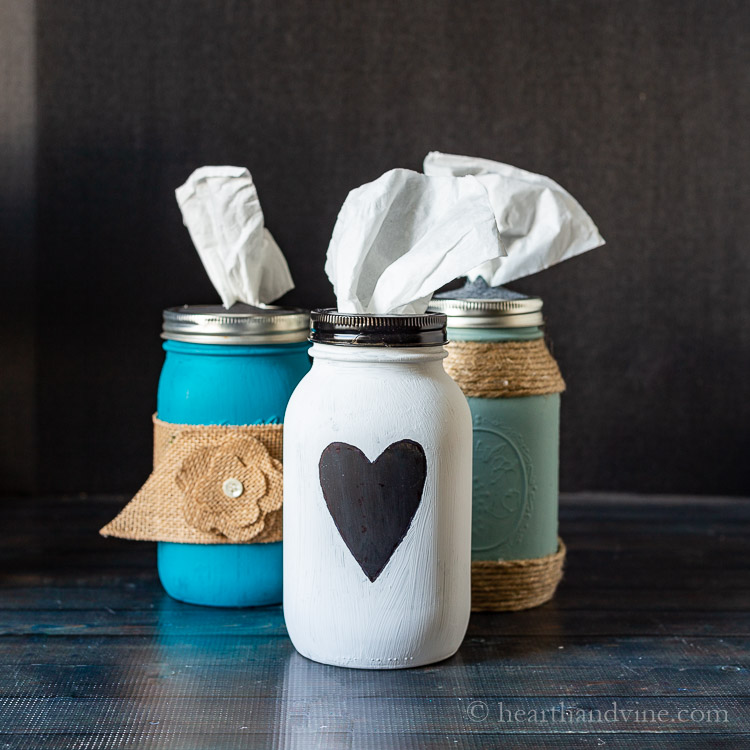
Transform household items into custom holders: Mount 3-4 quart mason jars on reclaimed wood boards using keyhole hangers for rustic storage (1 roll per jar). Seal natural wood with polyurethane to withstand humidity. For industrial flair, build black iron pipe holders (½” or ¾” diameter) into L-shaped configurations holding 6 rolls. Drill pipes directly into wall studs—never rely on drywall anchors for this weight. Apply clear coat spray annually to prevent rust in steamy environments. These DIY options cost under $20 but require 2-3 hours of assembly time.
Pro Installation and Maintenance Tips
Wall Mounting Precision
Locate studs with an electronic finder before drilling—standard 16-inch spacing avoids hollow spots. In tile walls, use diamond-tipped bits at low speed to prevent cracking. Mount single-bar holders 26 inches from the floor center for universal access, or 15-48 inches for ADA compliance. Test stability by hanging 8 lbs (equivalent to 4 rolls) before final installation. Never mount above-tank solutions without measuring lid height first—rolls should clear the lid by 2 inches when seated.
Material-Specific Care
Metal holders need weekly mild soap cleaning and monthly polish to maintain brushed finishes; skip ammonia-based cleaners that strip protective coatings. For bamboo or wood pedestals, dry-dust daily and apply mineral oil monthly to prevent warping. Immediately wipe spills on wooden units—delayed cleanup causes irreversible swelling. When refilling, orient paper overhand (top-down) for standard use or underhand to deter pets. Verify mega roll compatibility: holders must accommodate 5.5-6.5 inch diameters versus standard 4.5 inch rolls.
Budget-Friendly Purchasing Guide
Value-Based Selection
Economy holders ($5-15) suit renters needing temporary fixes but often warp within 90 days. Invest $15-50 in powder-coated steel or solid bamboo units with 1-3 year warranties—they withstand humidity better. For permanent homes, premium marine-grade stainless steel ($50-200+) justifies its cost through lifetime durability in steamy environments. Always check weight ratings: units holding 4+ rolls need 10+ lb capacity.
Strategic Shopping Tactics
Test stability in-store by loading rolls into display models—wobbly bases indicate poor construction. Online, filter reviews for “stability” and “humidity resistance” mentions. Big box stores offer immediate availability but limited styles; Etsy provides handcrafted options (like tree branch holders) with moisture-resistant sealing. For tight spaces, prioritize wall-mounted solutions over floor units—they reclaim 100% of valuable square footage while keeping rolls accessible during emergencies.
Choosing the best spare toilet paper holder ideas balances three non-negotiables: spatial reality, moisture resistance, and effortless access. Prioritize wall-mounted or vanity-integrated solutions for bathrooms under 40 square feet—they eliminate tripping hazards while maximizing utility. Always match materials to your humidity levels: stainless steel for steamy master baths, sealed wood for powder rooms. Implement these strategies to transform a mundane necessity into a seamless part of your bathroom’s workflow. When your next roll runs out, simply reach behind the tank or beside the vanity—no more frantic dashes down the hall. For ongoing inspiration, explore geometric wall modules or animal-themed holders that merge function with personality in high-traffic bathrooms.